Walking tours4.8(170)
From Kanazawa · 2 to 4 hrs
Samurai and Geisha: Kanazawa Walking Tour
- Private or small groups available
- Pickup available
from $55
View tourGuides
Language
EnglishCurrency
US dollar · $GetYourGuide converts to the currency you select here.
A 2.5 to 3-hour walk from the samurai lanes of Nagamachi up to the castle of the Maeda lords and into Kenroku-en garden, led by an English-speaking guide.
Typically booked up 6 days in advanceReserve now, pay later
On the side · the walk itself
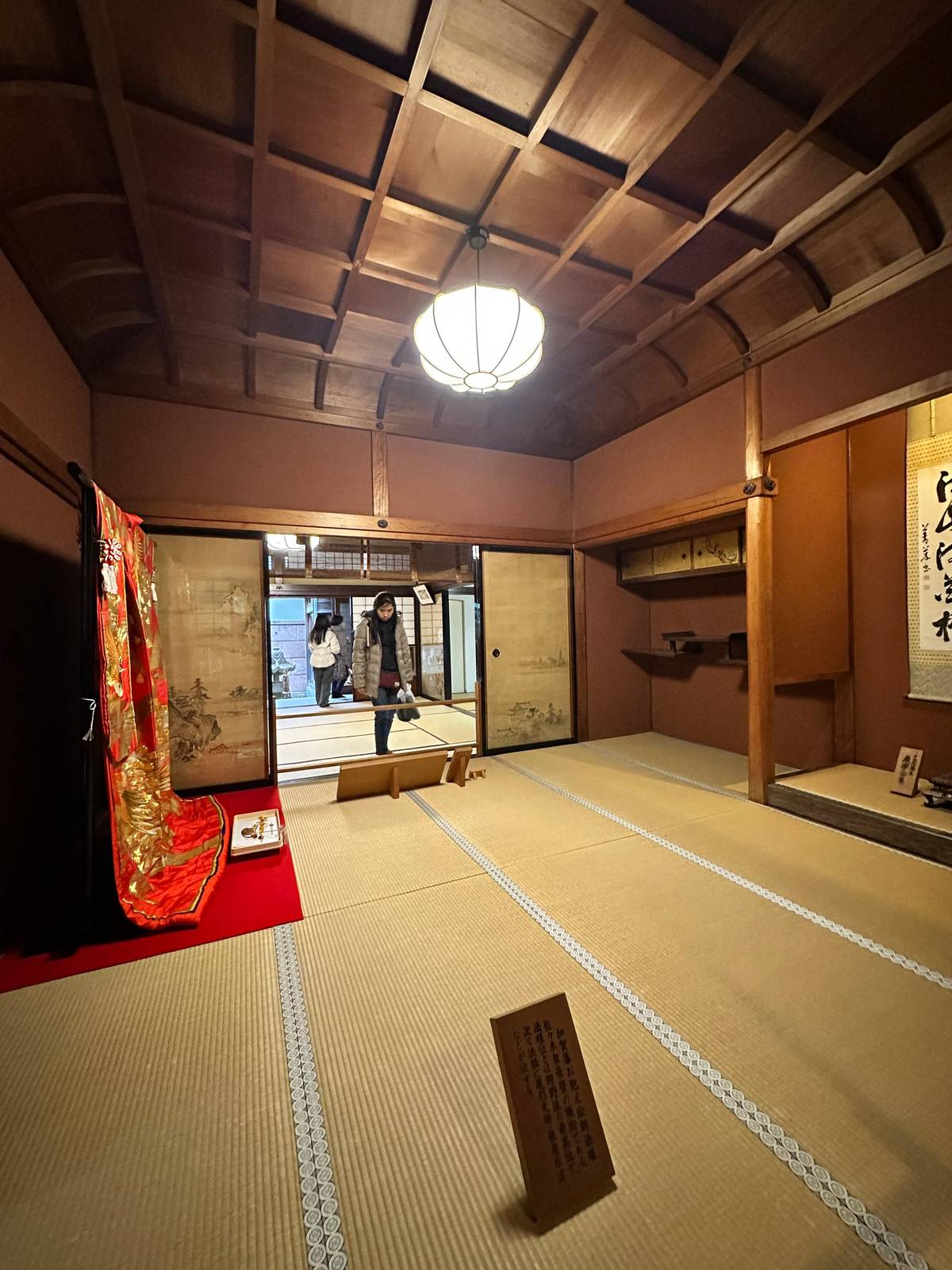
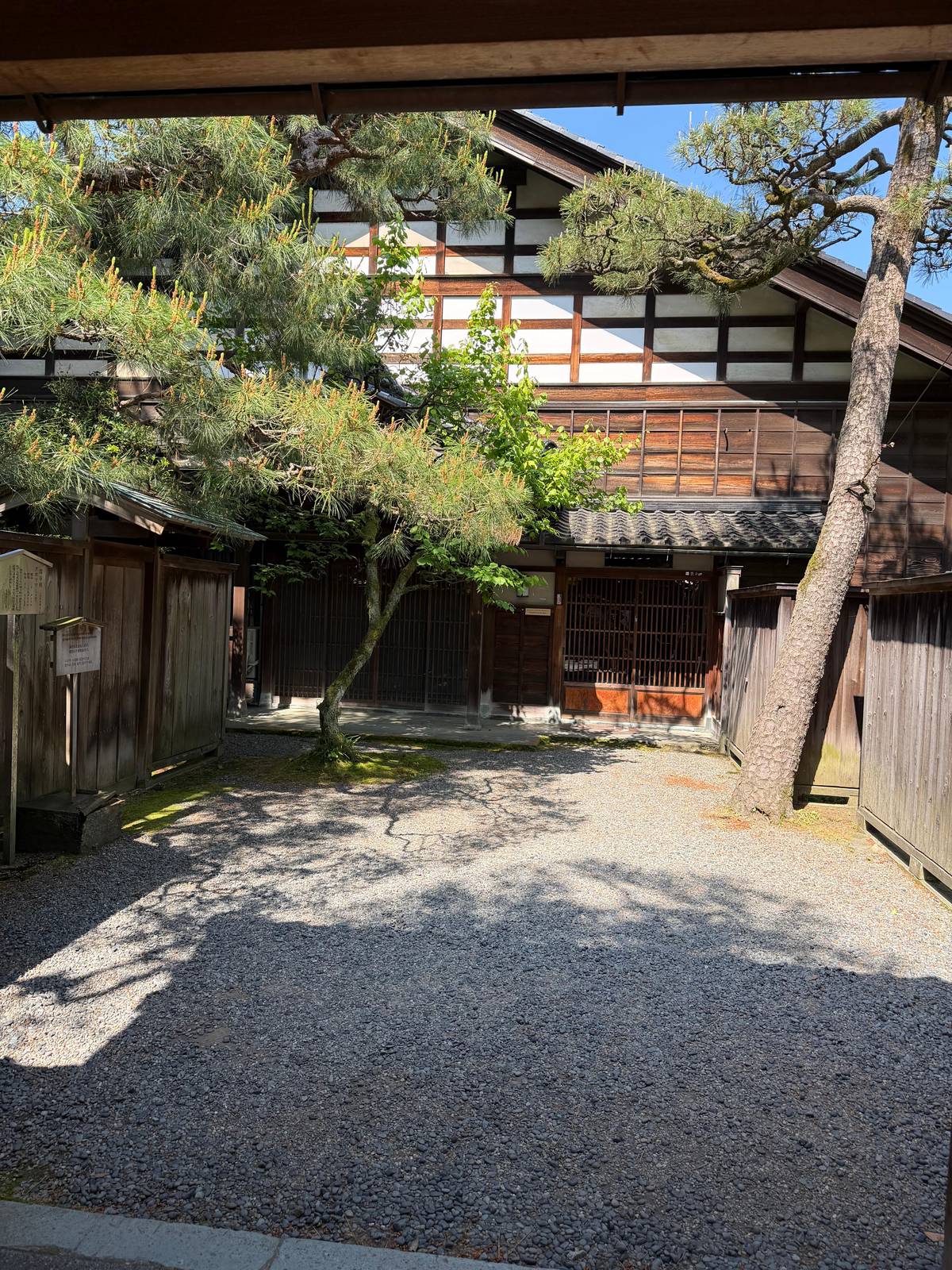
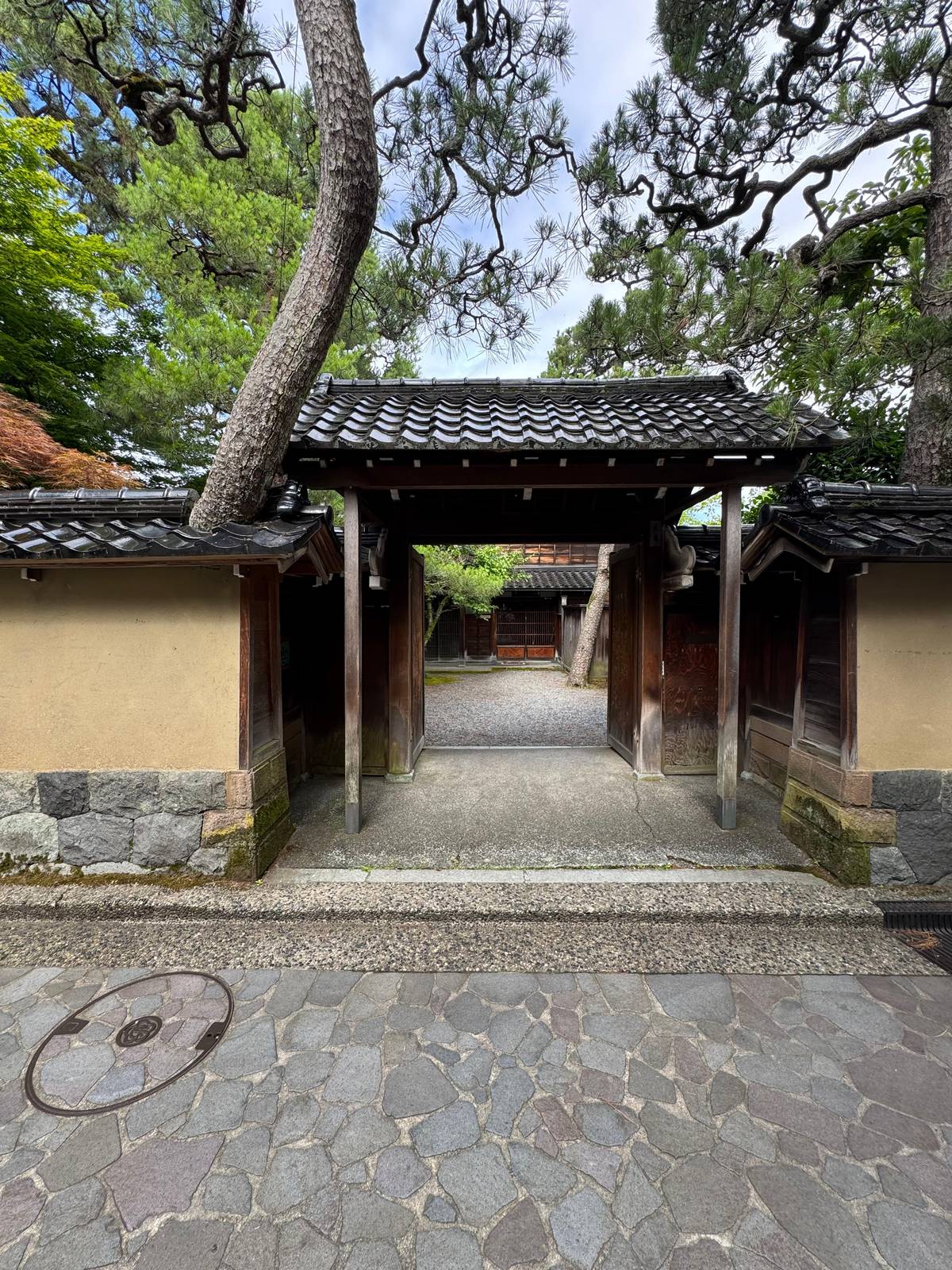
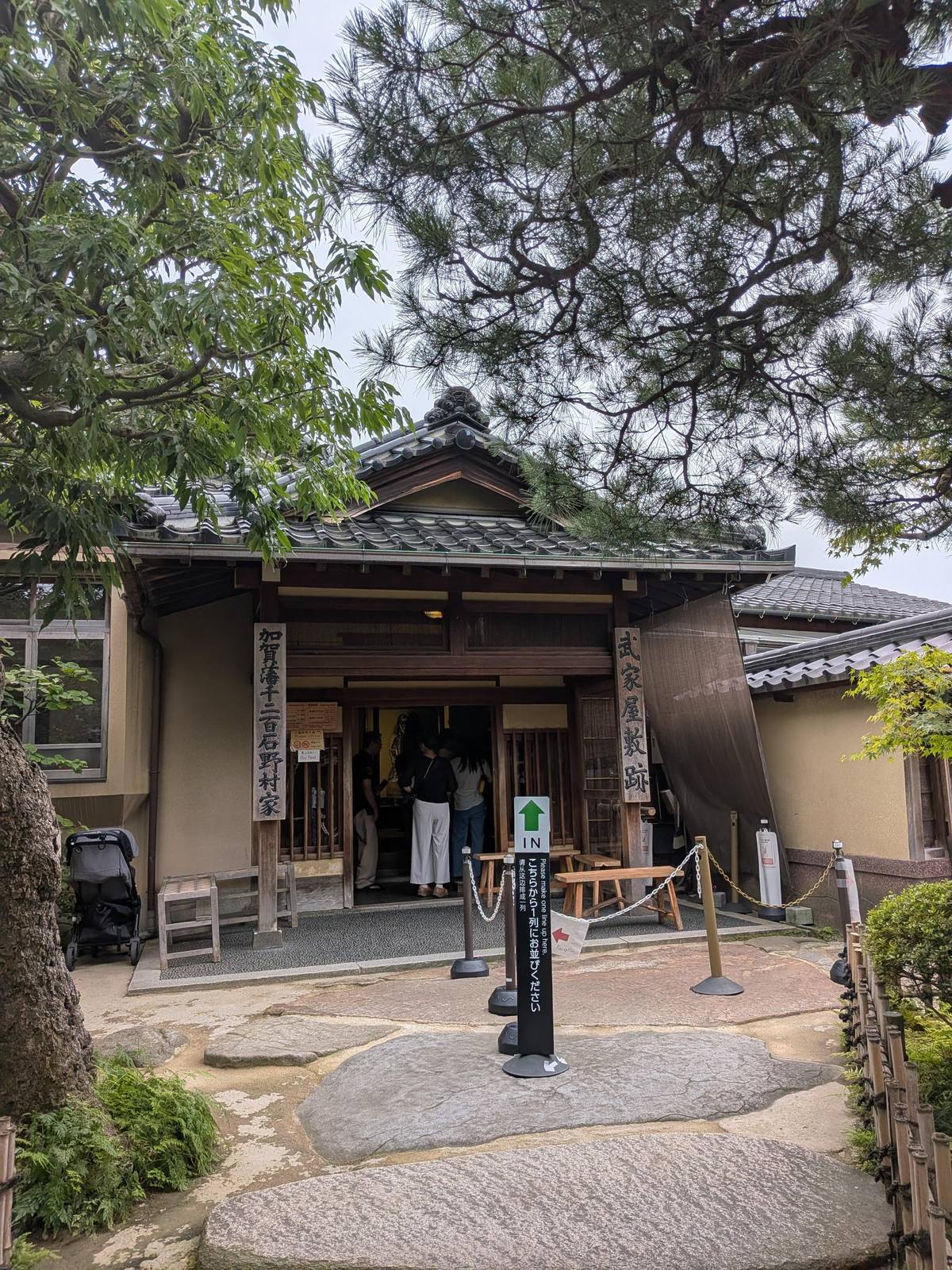
The walk starts in front of the Starbucks Coffee at Korinbo, the busy crossing in the middle of town, and within 5 minutes you are among the earthen walls of Nagamachi. The guide spends 40 minutes there, with the Nomura samurai house seen from outside, before a 15-minute walk up to the castle.
At Kanazawa Castle you spend another 40 minutes among the gates, turrets and stone walls of the Maeda lords' seat, then cross in 5 minutes to Kenroku-en for the final 40 minutes in the garden. The whole route is about 2.5 to 3 km, at a relaxed pace, with time for photos and short breaks along the way.
Between the stops the guide shows historical pictures on an iPad and points out the best spots for photographs. By the end you have walked from the homes of the retainers to the castle they served and into the garden built for their lords, the order in which the old city makes the most sense.
Why this walk
This guided walk links the three places that tell Kanazawa's samurai story: 40 minutes in the Nagamachi district, 40 minutes at Kanazawa Castle and 40 minutes in Kenroku-en, about 2.5 to 3 km at a relaxed pace. It is rated 4.91 from 247 reviews and starts from $61. Entry fees are paid separately.
Free cancellation up to 24 hours before
On the side · the maeda lords
Kanazawa Castle history begins with a temple: the site first appears as Kanazawa Mido, a branch temple built in 1546, which was taken in 1580 when Sakuma Morimasa became the castle's first lord. Maeda Toshiie entered the castle in 1583, and his family governed from it for over 300 years, until 1869.
Under the Maeda, Kanazawa was the centre of the Kaga domain and the seat of one of the richest lordly families in Japan. That wealth paid for the gardens, the crafts and the large samurai houses that still define the city. The family kept all its retainers in Kanazawa, which is why samurai quarters like Nagamachi grew up around the castle.
The castle itself burned again and again. The keep was struck by lightning in 1602 and never rebuilt, the great fire of 1759 destroyed its main buildings, and a fire in 1881 left only three structures standing. What you see today is those survivors plus careful reconstructions, and knowing which is which makes the visit far richer.
Reviews
 5.0
Our guide gave us real history and local insight, got us around easily and answered every question with obvious passion for her city.”
 KeoJuly 2026, as a couple · GetYourGuide
Verified
 5.0
We booked a private tour and loved it. Our guide knew so much, shared plenty of interesting stories and could answer all of our questions.”
 JamesJuly 2026, with family · GetYourGuide
Verified
 5.0
Good value with an excellent guide. The samurai house only made sense to me through the guide's explanations, and the rest of the city meant more afterwards.”
 AndrewMay 2026 · GetYourGuide
Verified
 5.0
A small group, so the walk felt relaxed. Our guide explained the castle grounds and the garden well, and afterwards we stayed for tea by a pond.”
 IvanJune 2026 · GetYourGuide
Verified
 5.0
A friendly, knowledgeable guide who used pictures and symbols to support the stories. Plenty of photo stops, and the private option let us personalise it.”
 JoanneJune 2026 · GetYourGuide
Verified
 5.0
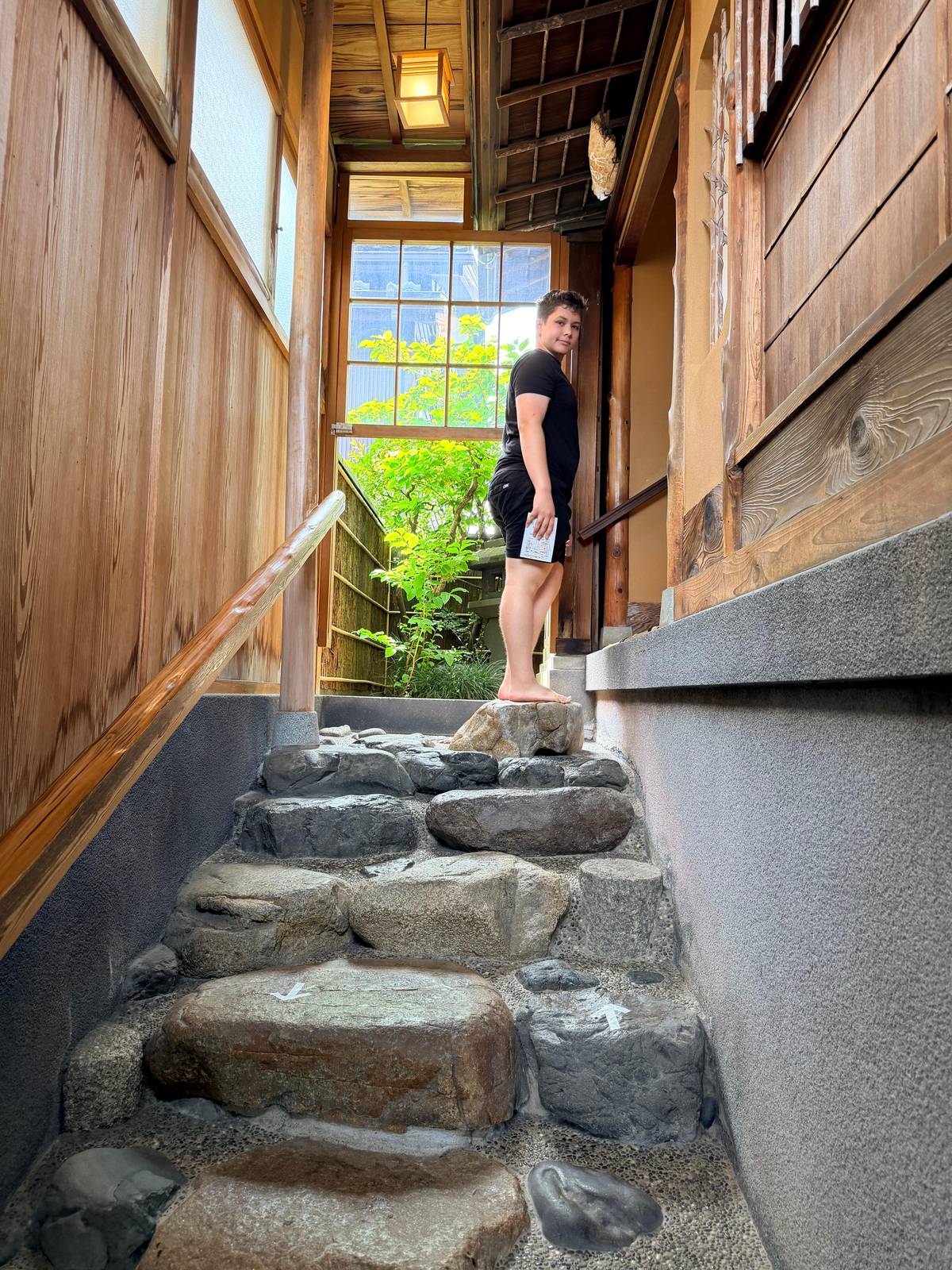
On a warm day our guide kept checking that everyone was comfortable and that nobody got lost. Informative on samurai history, and the gardens were beautiful.”
 ScottJune 2026 · GetYourGuide
Verified
On the side · what guests say
The walk is rated 4.91 from 247 reviews, with a 5 for the guide and 4.8 for value for money. Reading the recent reviews, the same points return again and again: guides who know their history, explain it with stories, and answer every question patiently.
Several reviewers mention the photo help and the pictures shown along the way, and others praise a relaxed pace and a small group that made the walk feel personal. One guest on a warm day wrote that the guide kept checking that everyone was comfortable. A family with a young child said their guide stayed patient all the way round.
Reviewers are honest about the limits too. One noted that Kanazawa has much more to see than the tour covers, such as the geisha district and the Ninja Temple, and found those more rewarding after learning the history first. Another, on a private booking, missed the castle stop, so if the castle matters to you, mention it when you book.
Compare
Adds Higashi Chaya
Kanazawa Highlights: Garden, Castle, Samurai and Geisha with Taxi
5.0 (63)
from $54
 A whole day with tea
Kanazawa: Samurai, Matcha, Gardens and Geisha Full-Day Tour
4.9 (158)
from $142
Kanazawa, more of it
More experiences in and around Kanazawa: live prices, free cancellation.
From Kanazawa · 2 to 4 hrs
from $55
View tour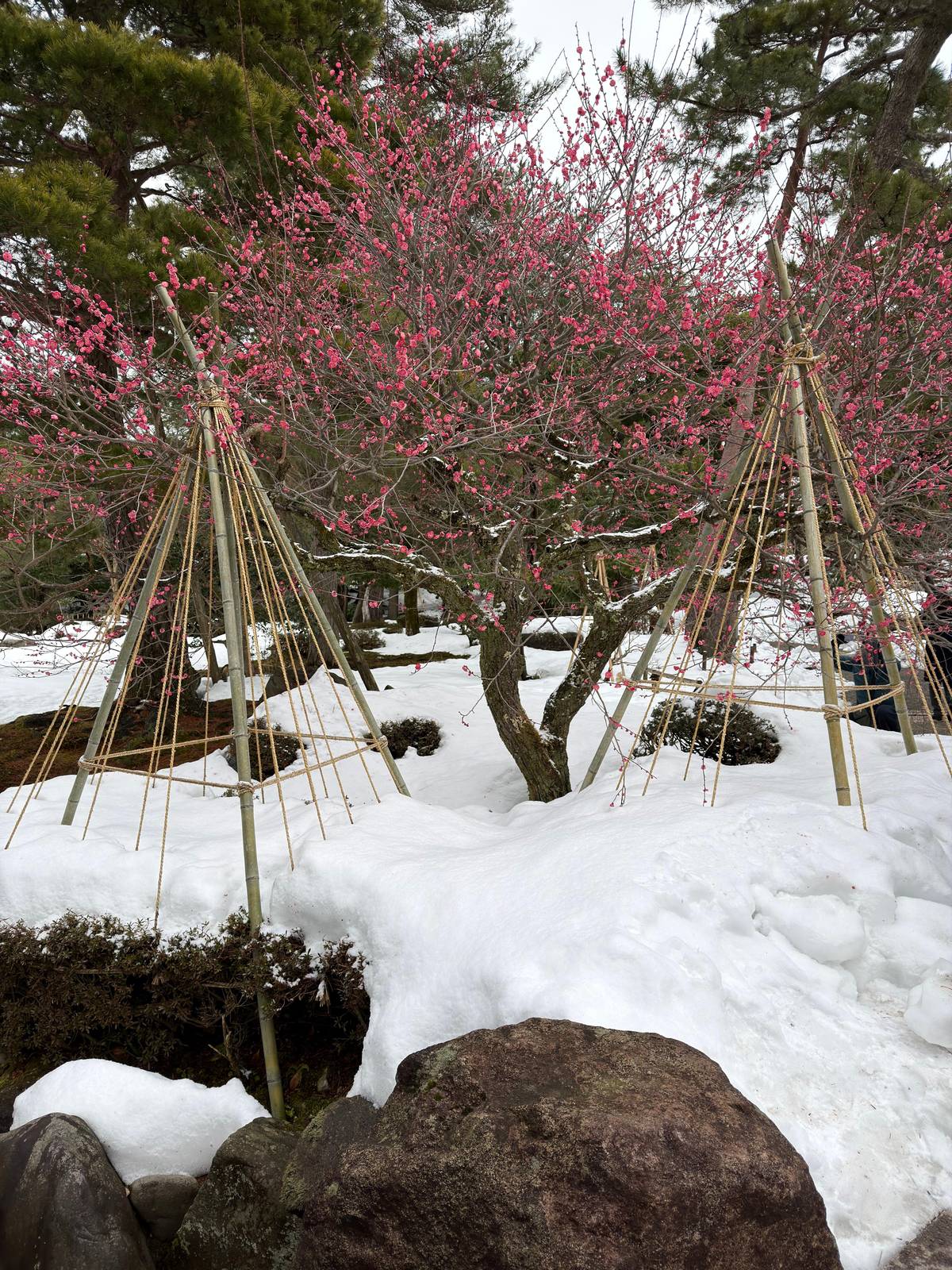
From Kanazawa · 3 to 6 hrs
from $83
View tour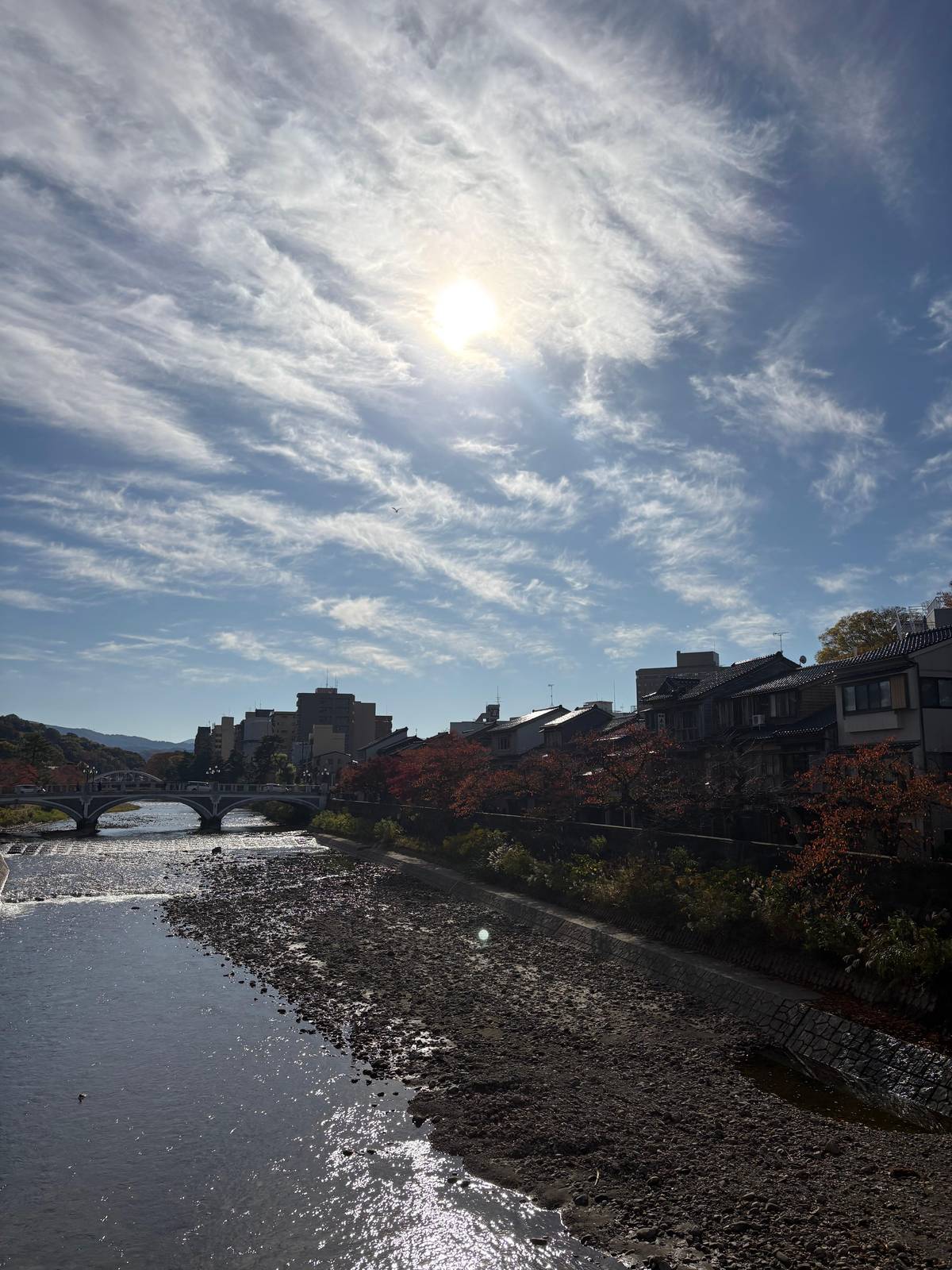
From Kanazawa · 2 to 8 hrs
from $65
View tour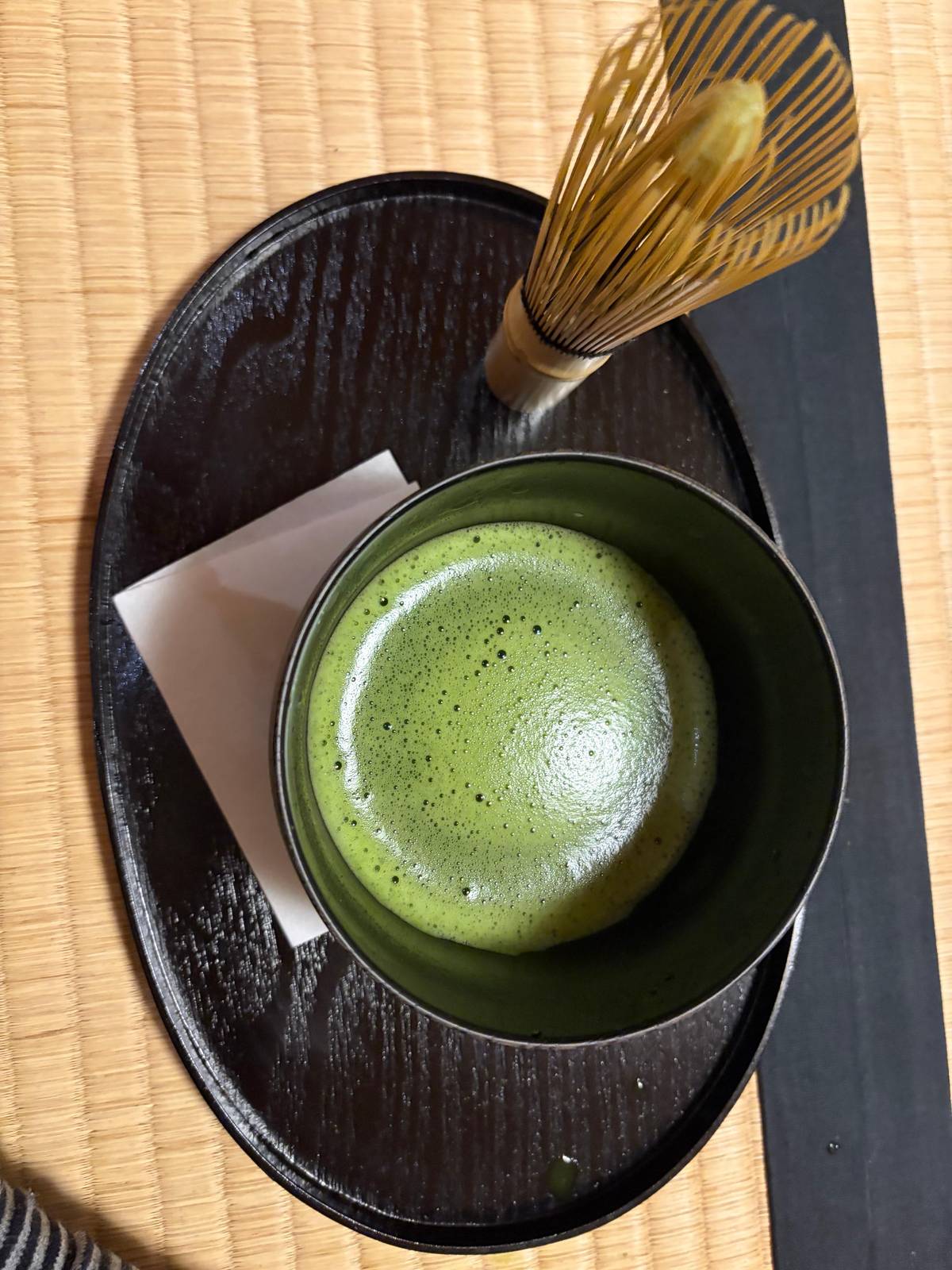
From Kanazawa · 4 hrs
from $71
View tour
From Kanazawa · 1 hour
from $32
View tour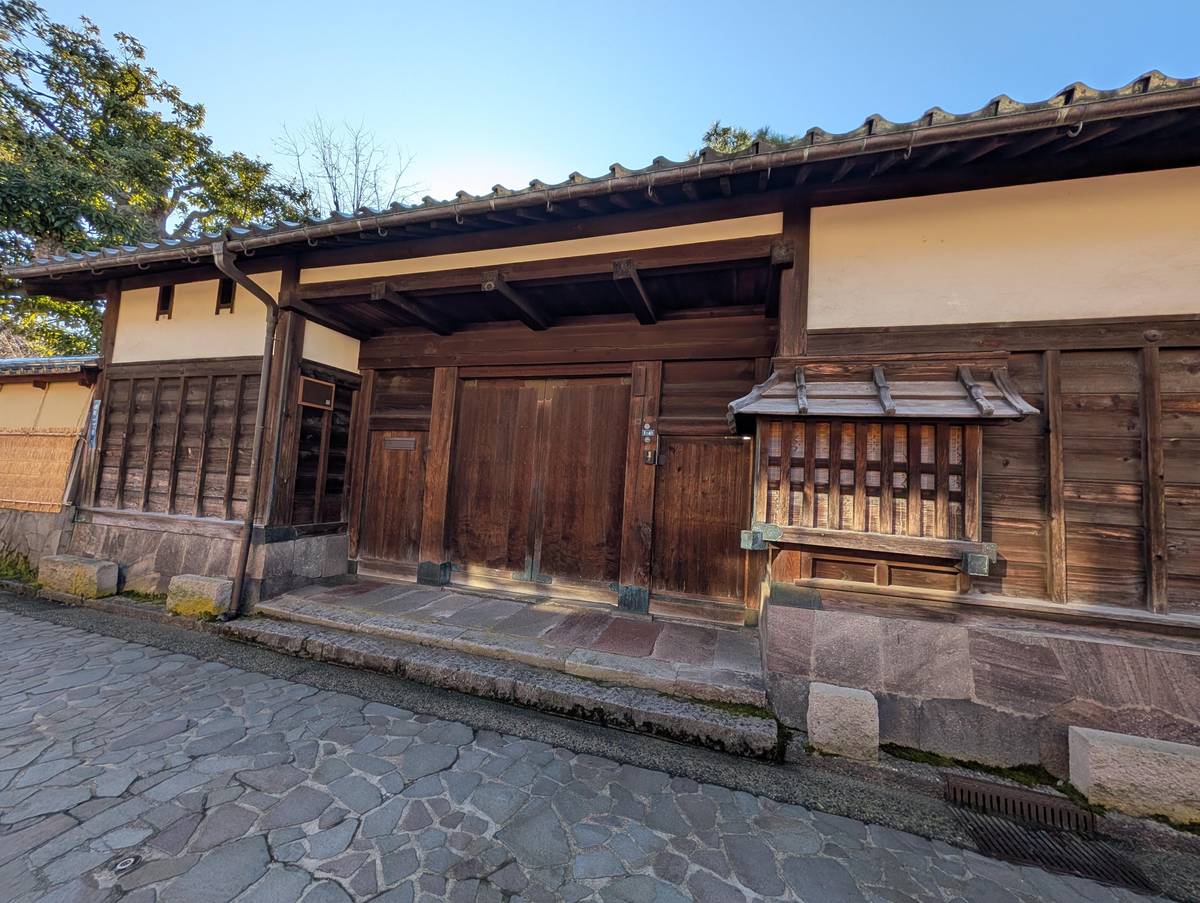
From Kanazawa · 1 day
from $848
View tourOn the side · the seasons
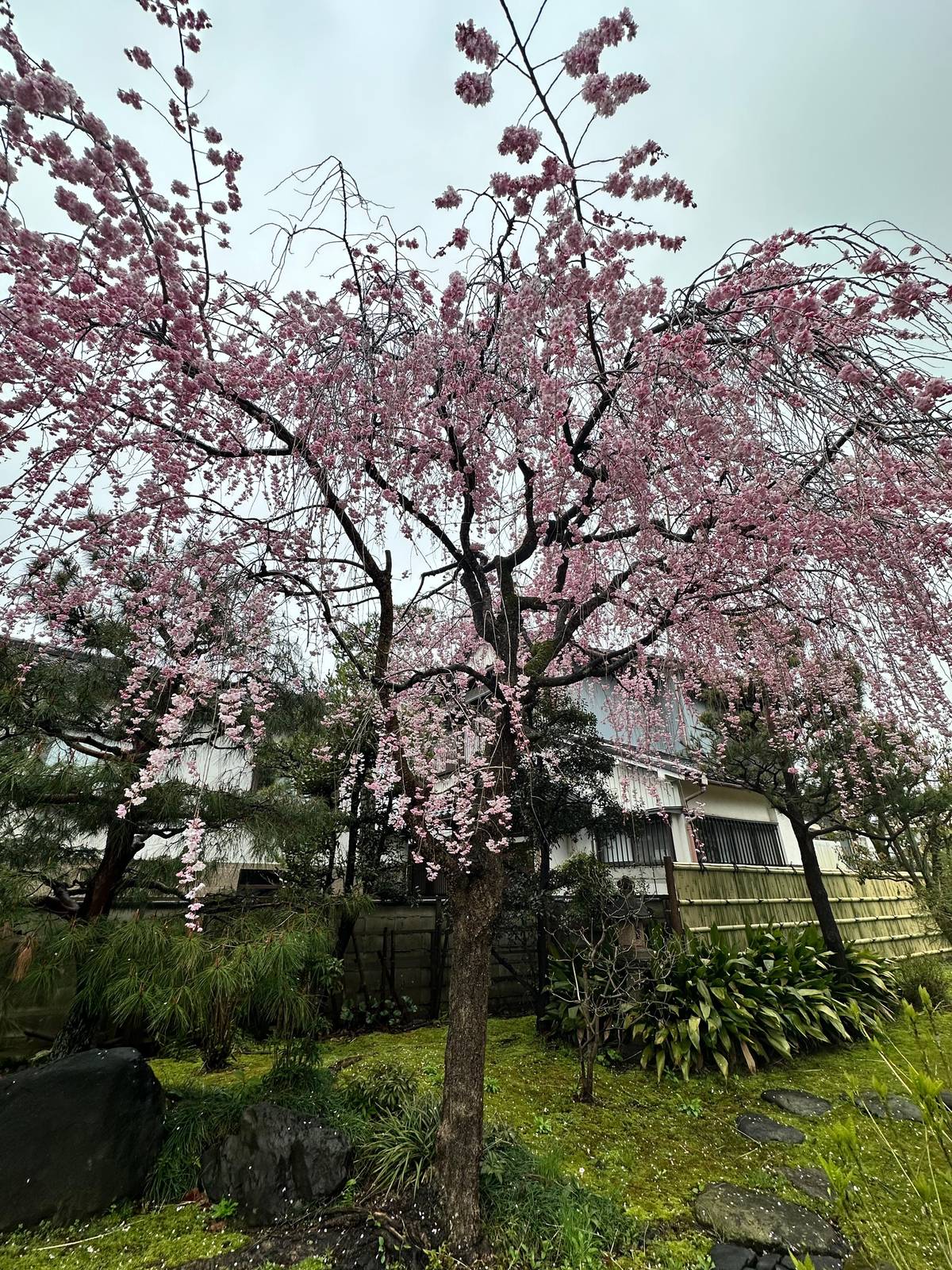
Ishikawa has four clear seasons: a warm spring, a hot and humid summer, a cool autumn and a snowbound winter. Cherry trees bloom in April, and Kenroku-en is one of the prefecture's most popular places to see them. Autumn colour is at its brightest from mid to late November.
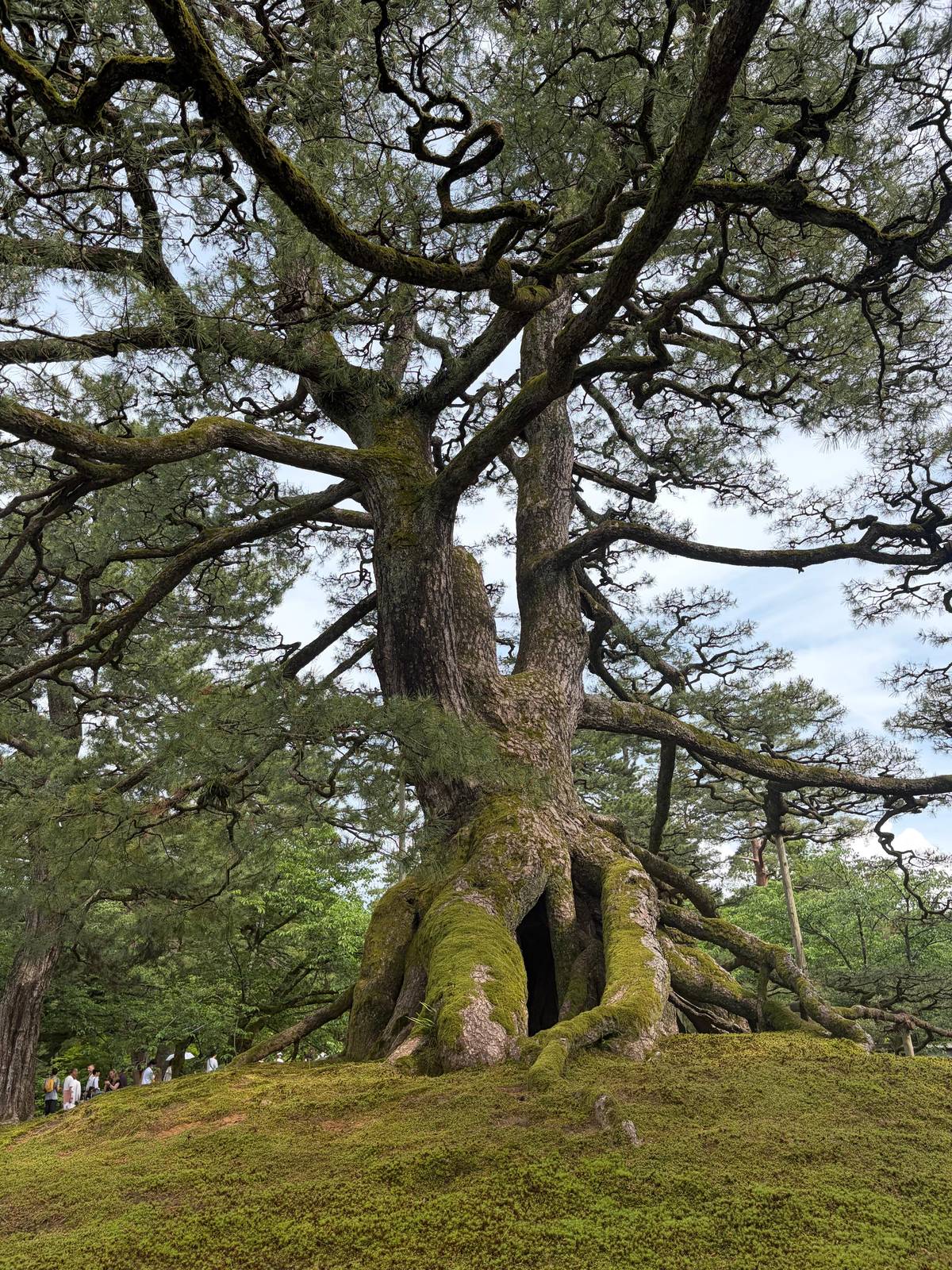
In November the gardeners of Kenroku-en tie the pines with yukitsuri, cones of rope that protect the branches from snow, and the first snow follows in early December. January, the coldest month, averages a high of 7.1 °C, while August peaks at 31.3 °C.
The walk works in every season because it moves between streets, a park and a garden at a relaxed pace. In summer, start early and carry water; in winter, wear shoes with grip and a warm layer. The castle park opens every day of the year, so there is no wrong month to go.
Gallery
On the side · rain and snow
Kanazawa is a wet city: the weather station records a normal annual precipitation of 2,401.5 mm, spread across the year. December is the wettest month, with 301.1 mm, and the rainy season from mid-June to mid-July is very wet. Bring an umbrella in any month.
In winter the snow arrives in early December, and January brings a normal snowfall of 67 cm. The lanes of Nagamachi and the garden paths can be slippery when wet or frozen, so footwear with a good tread is the one thing worth fussing over. Snow boots can be rented at the tourist information center at Kanazawa Station.
Rain is no reason to cancel. Wet stone darkens, the moss shines and the garden ponds reflect the sky, and the castle's lead tiles turn silvery white with weather. If the forecast is truly bad, remember that the walk costs nothing to cancel until 24 hours before it starts.
Your castle walk
Pick a date, meet at Korinbo, and keep the option to cancel at no cost for up to 24 hours before.
On the side · the castle
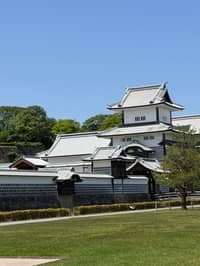
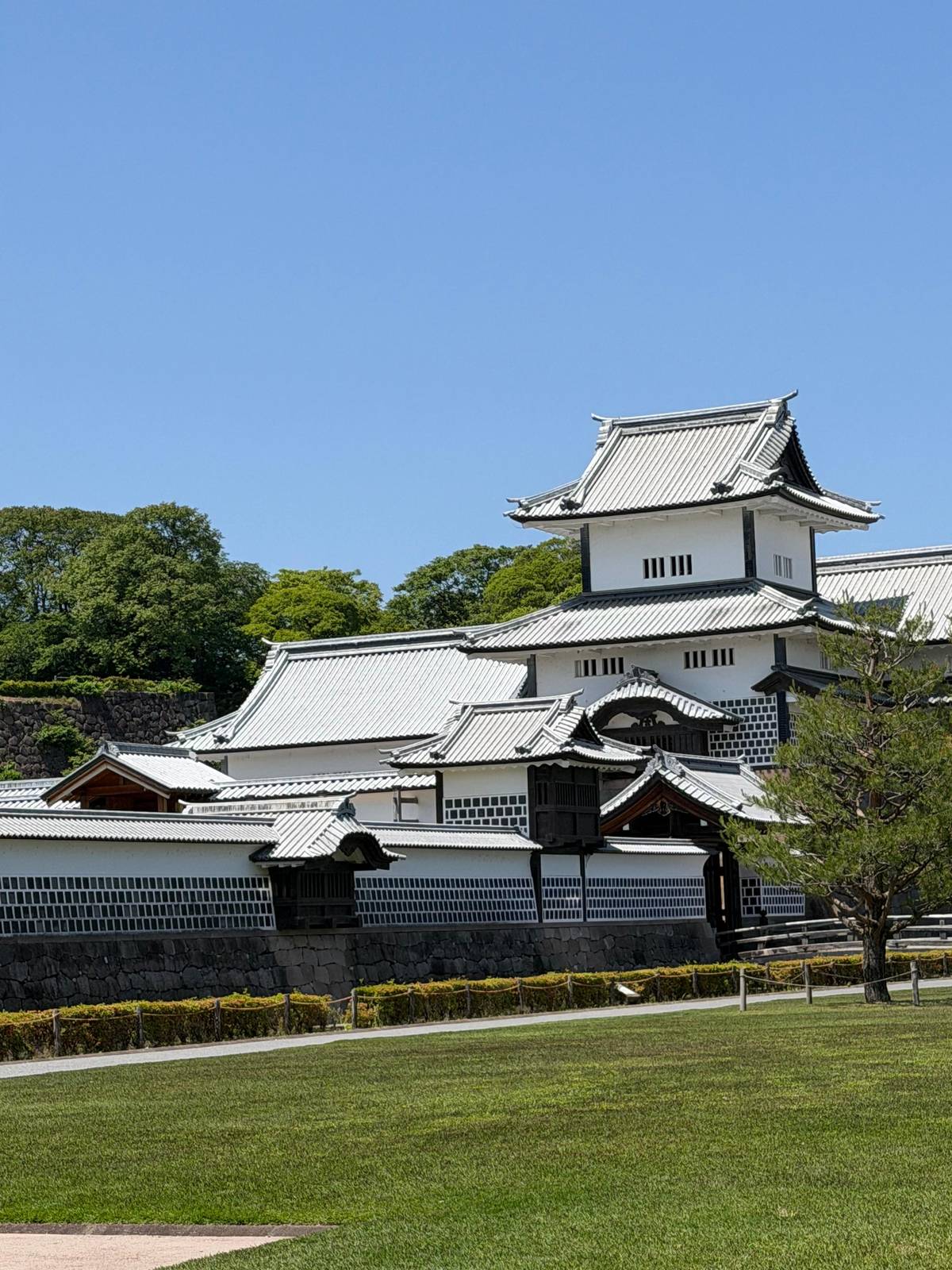
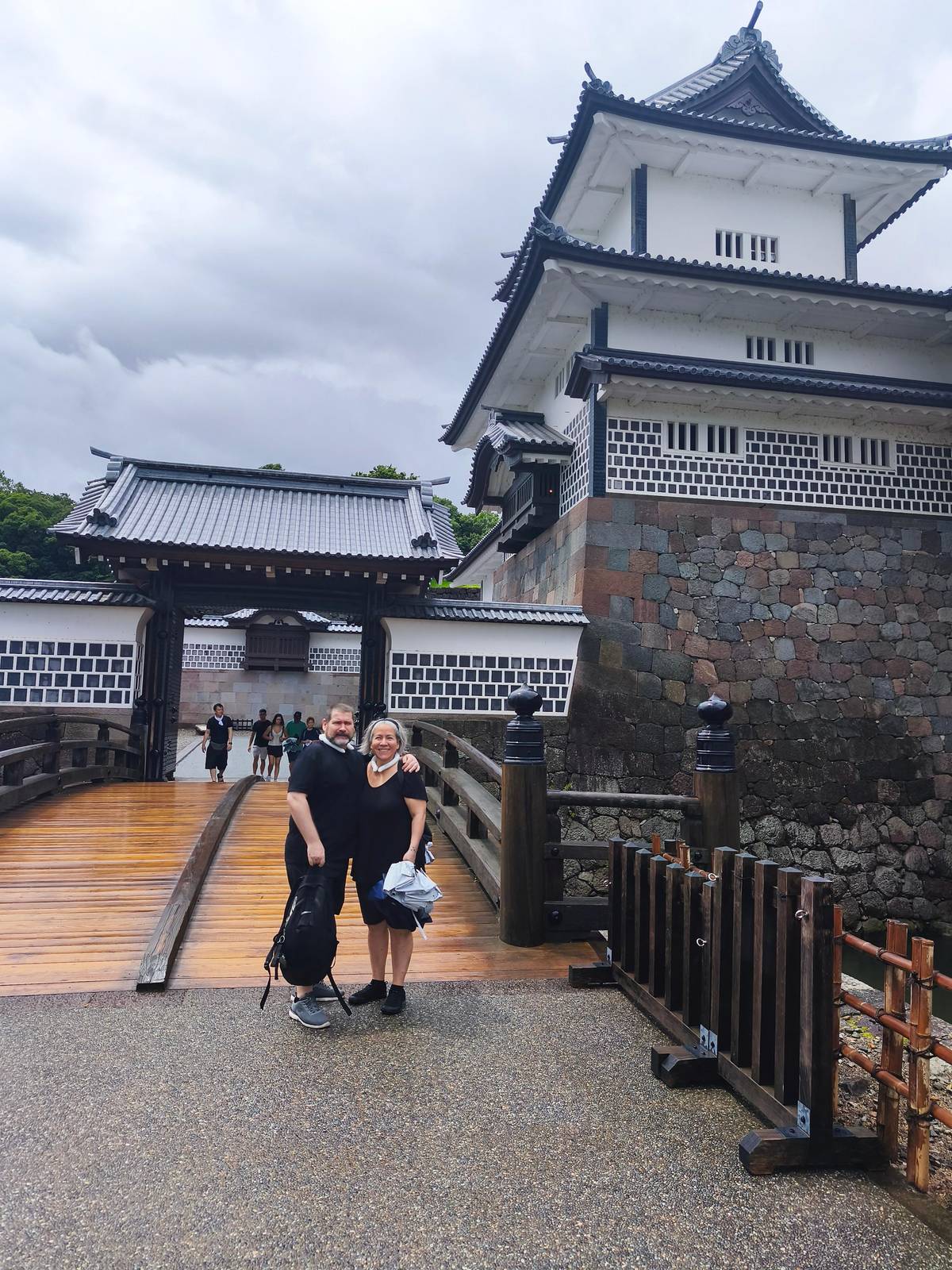
Kanazawa Castle Park is free to enter and opens every day, with the grounds open from 7:00 in summer and 8:00 in winter. You enter past Ishikawa-mon, rebuilt in 1788 and the oldest structure on the grounds, an Important Cultural Property since 1950. Only Ishikawa-mon and the Otemon of Osaka Castle keep all their masugata enclosures from the feudal period.
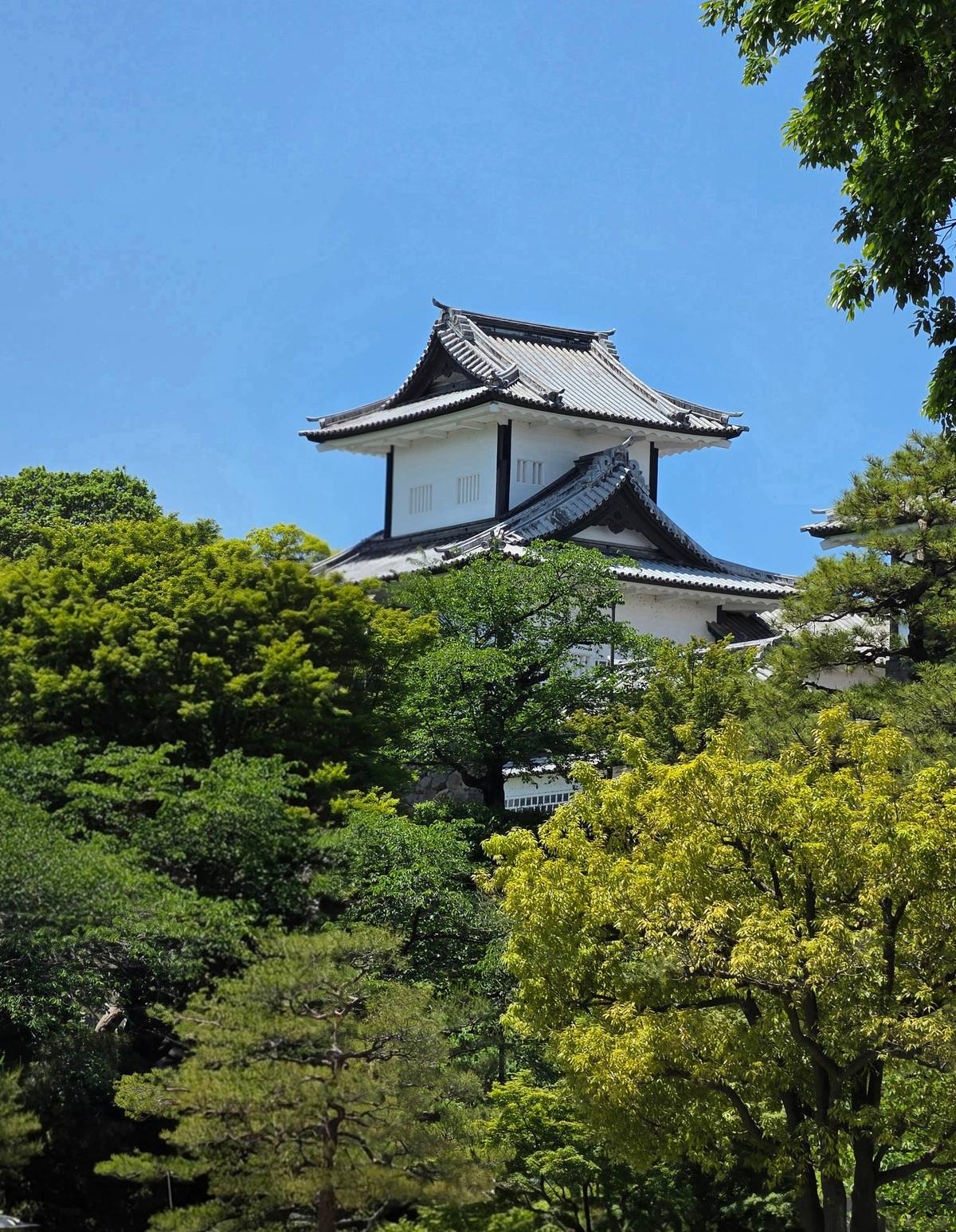
The roofs are covered with lead tiles, sheets of lead over wooden forms that turn silvery white in the rain. The rebuilt Hishi-yagura turret is built on rhombus shapes of 80 and 100 degrees, and the walls below are so varied in style that the castle is called a museum of stone walls.
Those walls use Tomuro stone, quarried on Mt. Tomuro about 10 km south of the castle, in reddish and bluish tones. The castle sits on a plateau, about 30 meters higher at the Honmaru than at its outer edge. Walk up from the lower gates and you feel that rise in your legs, and the views open as you climb.
Weather
Japan Meteorological Agency normals for the Kanazawa station, 1991 to 2020: highs, lows and rainy days; day length is calculated.Japan Meteorological Agency normals for the Kanazawa station, 1991 to 2020: highs, lows and rainy days; day length is calculated.
On the side · the garden
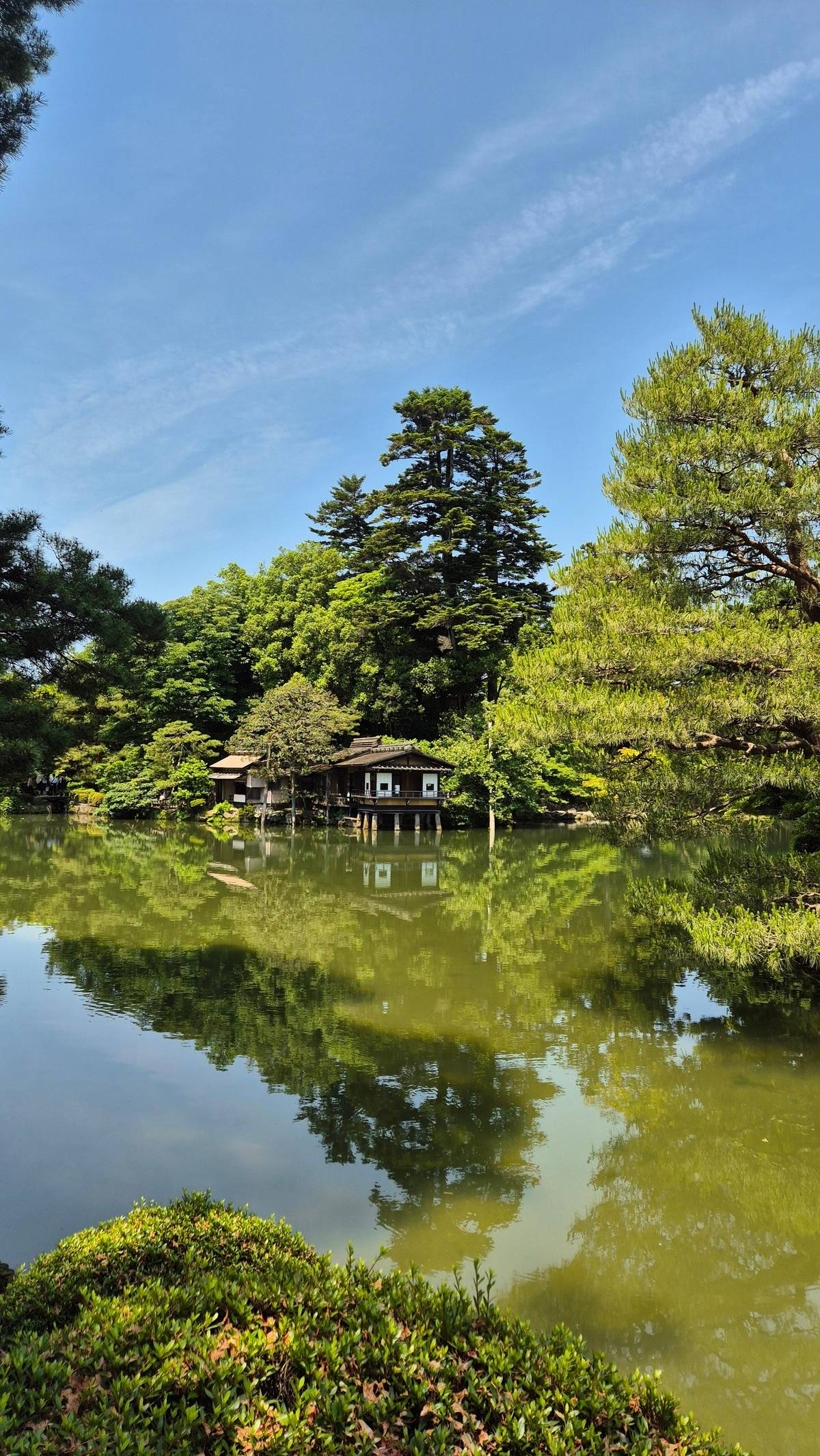
The walk ends in Kenroku-en, which together with Kairaku-en in Mito and Koraku-en in Okayama is counted among the three most beautiful gardens in Japan. Its name means a garden that combines six characteristics: spaciousness and seclusion, artifice and antiquity, water-courses and panoramas.
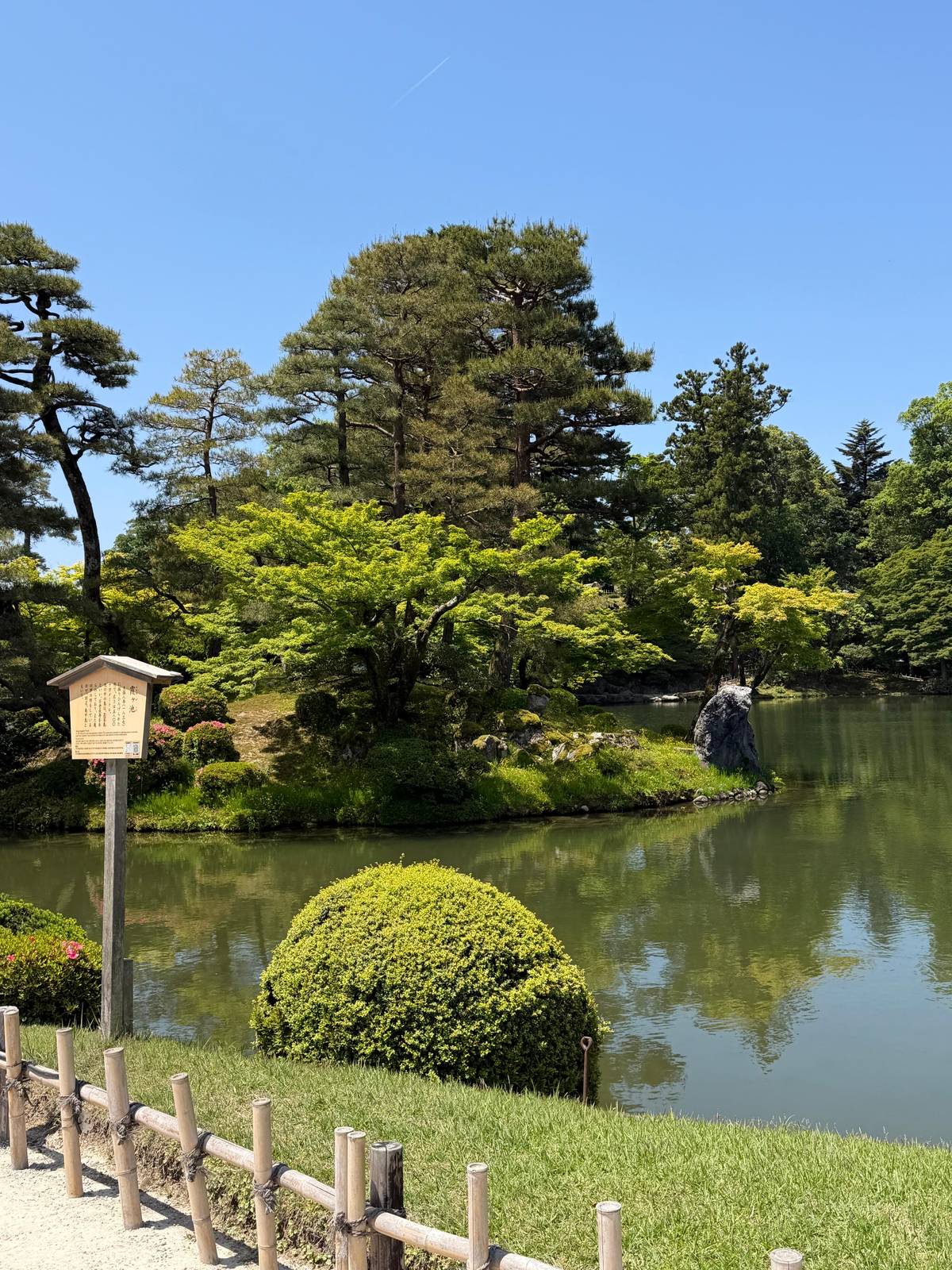
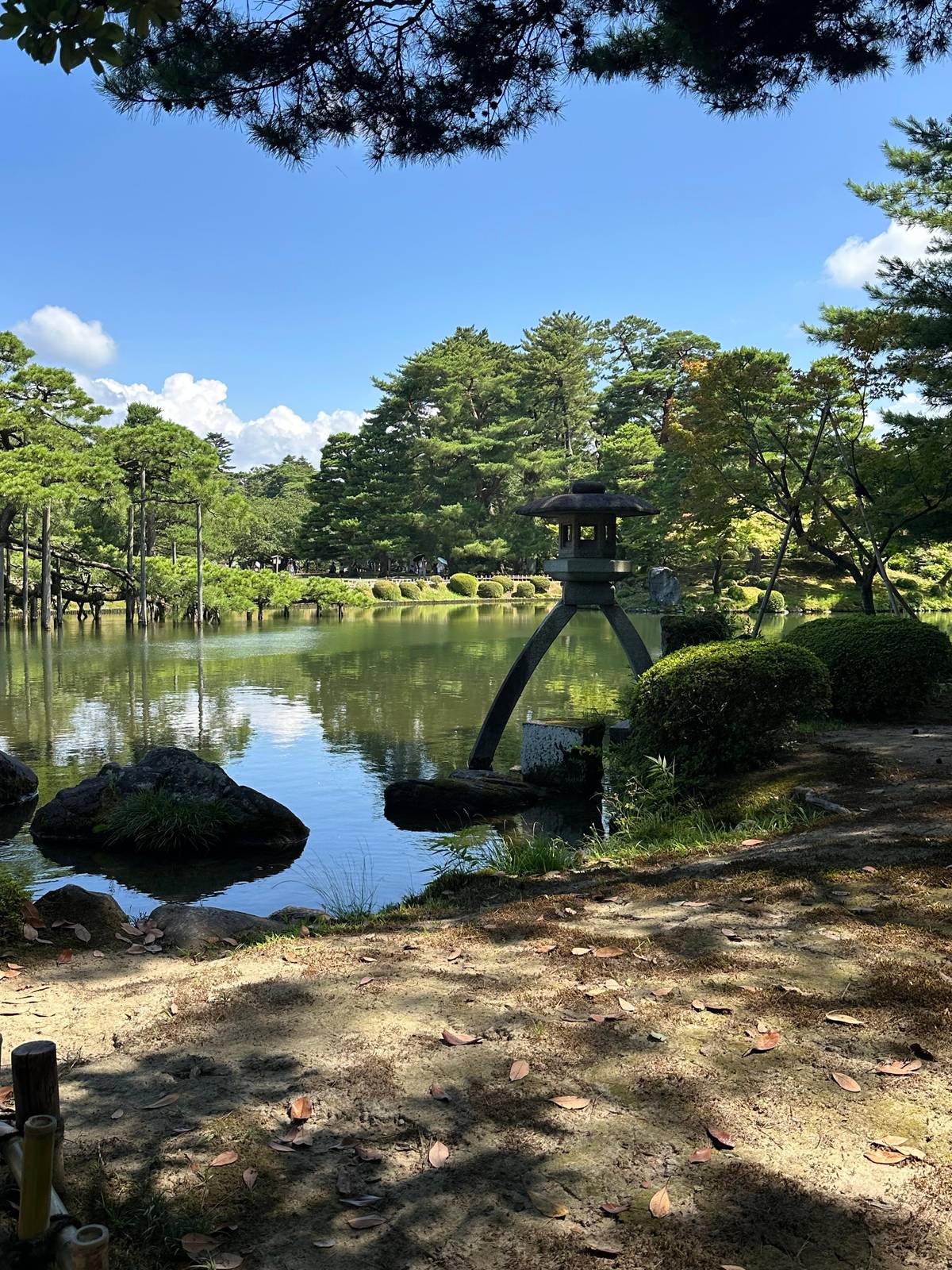
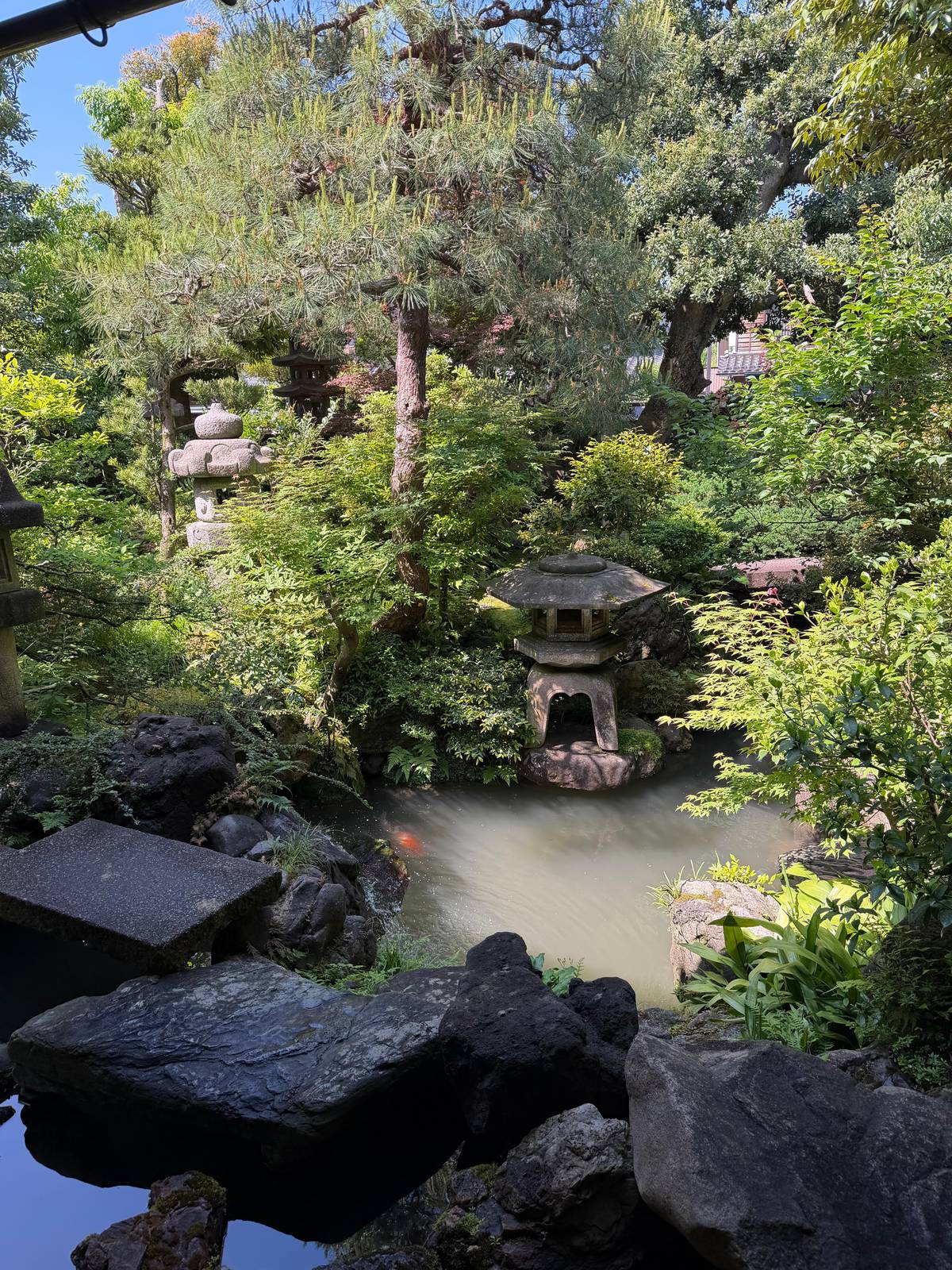
It is a strolling garden, laid out by the Maeda lords over generations with ponds, hills and tea houses. Look for the Kotoji stone lantern with its uneven legs at the edge of Kasumiga-ike, and for Yugao-tei, built in 1774, the oldest structure in the garden.
A ticket costs 320 yen for adults, in cash only, and it is not included in the walk's price. One reviewer stayed on after the tour for tea in a tea house by a pond, a fine way to end the morning: Shigure-tei serves powdered tea with a sweet for 800 yen.
The oldest gate
Ishikawa-mon was rebuilt in 1788 and still stands.
It is the oldest structure on the castle grounds, an Important Cultural Property since 1950, and one of only two castle gates in Japan that keep their full masugata enclosure.
On the side · what to bring
The listing asks you to bring comfortable shoes, a camera and clothes for the weather. The route covers about 2.5 to 3 km on cobbles, gravel paths and gentle slopes, so choose shoes you have already walked in. Alcohol is not allowed on the walk.
Carry cash. The tour lists the Kenroku-en ticket of 320 yen and the Nomura samurai house entry of 550 yen among the costs not included, along with food, drinks, tips and souvenirs. The garden takes cash only, so coins and small notes save a queue at the gate.
In summer add a hat and water, in the rainy season an umbrella, and in winter gloves and shoes with grip. Bags stay with you the whole time, so pack light. If you want to linger afterwards in the garden or the castle park, plan lunch nearby rather than going back to the station first.
The practical part
On the side · your language
The live guide speaks English, and an audio guide is included in Chinese, Dutch, English, French, Italian, Korean and German. AI-supported translation support is available when needed, so mixed groups can follow along.
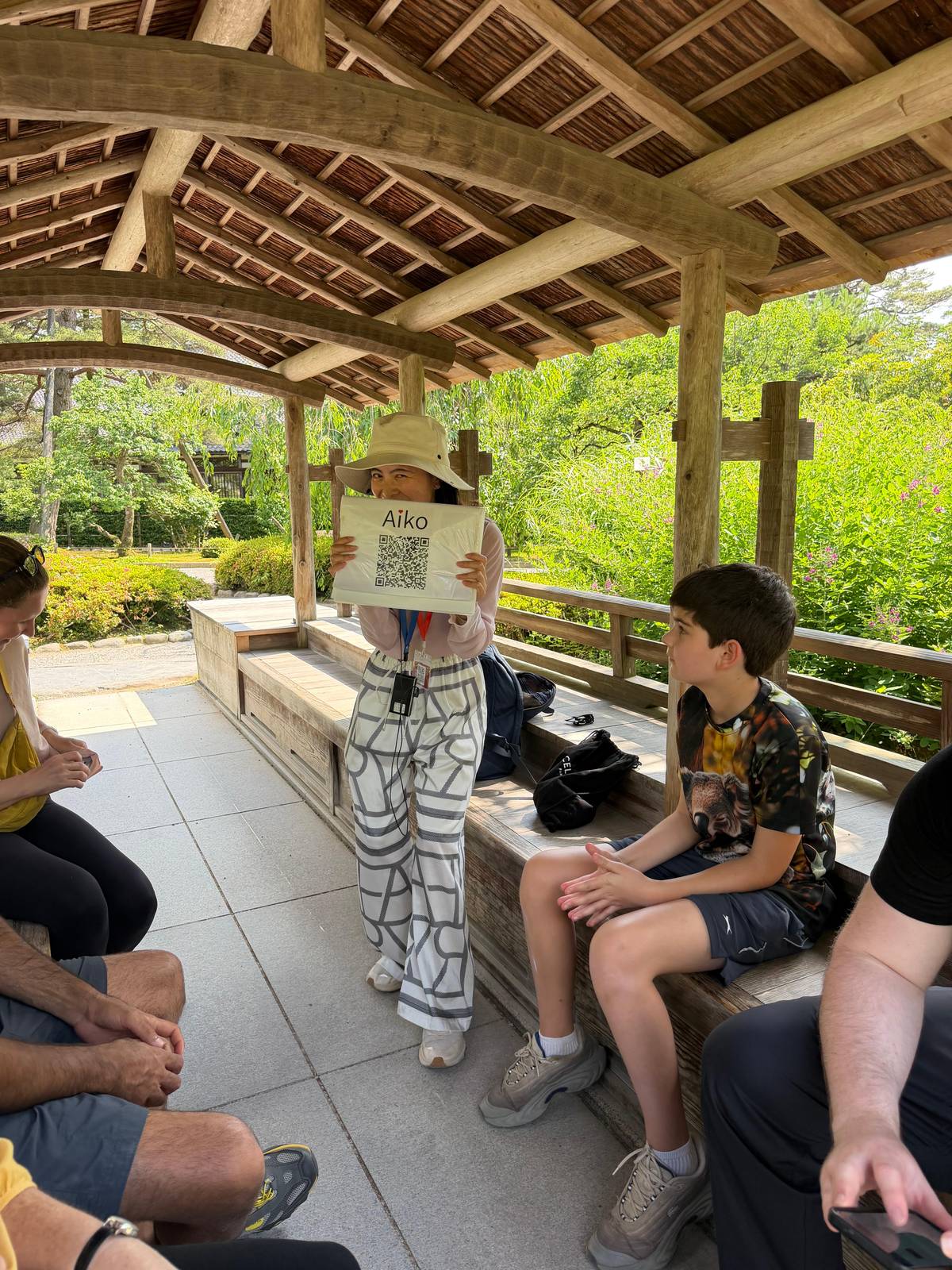
Along the route the guide uses an iPad with historical pictures and other visual material to support the stories. Questions are welcome throughout; the listing includes flexible time for them, and reviewers say the guides answer them gladly.
A private group option is available if you would rather have the guide to yourselves. Reviewers who booked privately describe adjusting the walk to their interests, which suits families and travellers with a special question about samurai history or the gardens.
2.5 to 3 hours. It covers about 2.5 to 3 km at a relaxed pace, with 40 minutes each in Nagamachi, at the castle and in Kenroku-en.
At Korinbo. The guide waits in front of the Starbucks Coffee at Korinbo, 5 minutes on foot from Nagamachi.
No. Kenroku-en (320 yen) and the Nomura samurai house (550 yen) are listed as not included.
7:00 to 18:00 in summer. Kanazawa Castle hours run 7:00 to 18:00 from 1 March to 15 October and 8:00 to 17:00 the rest of the year; entry is free.
Yes. An audio guide in Chinese, Dutch, French, Italian, Korean and German is included as well.
Yes, a private group is available. Choose the private option when you book to have the guide to yourselves.
No, it is an exterior visit. You can pay the 550 yen entry and go in after the walk.
No. Its stops are Nagamachi, Kanazawa Castle and Kenroku-en; plan the teahouses and Myoryuji separately.
Yes, free up to 24 hours before. You can also reserve now and pay later, which keeps your plans flexible.
Dress for the weather. Bring an umbrella or shoes with grip; if the forecast is bad, free cancellation up to 24 hours before helps.
On the side · after dark
The castle's outer walls are lit every day until 22:00, and on Sundays and in the busy seasons, including cherry blossom time, the castle park stays open from sunset to 21:00 with illuminations, free. A walk along the lit walls is a simple way to end a day.
Katamachi and Korinbo, where the walk meets, are the districts for shopping, dining and nightlife. Across the river, the teahouse lanes of Higashi Chaya turn atmospheric at dusk, and on certain nights Kaikaro hosts Geisha Evenings in Kanazawa, a performance in English.
The samurai lanes of Nagamachi are quiet after dark and lovely in the low light, with lamps reflected in the canals. Keep your voice down, since people live there, and finish at one of the small bars near Korinbo before heading back to your hotel.
Reserve now, cancel freely →Book now
Dates, times and prices come straight from GetYourGuide as they change, never copied by hand.
Typically booked up 6 days in advance
On the side · who it suits
This walk suits first-time visitors who want the samurai, the castle and the garden explained in order, in a single morning or afternoon. It suits families and couples, solo travellers and anyone who likes to ask questions, and the relaxed pace leaves time for photographs.
Know what it does not include. It does not visit the Higashi Chaya teahouse district or Myoryuji, the Ninja Temple, so plan those for another part of your stay. The Nomura samurai house is an exterior visit, and the garden and house tickets are paid separately.
If you want the teahouses on the same day, a longer tour that adds Higashi Chaya may suit you better; if you want only the castle side, explained well, this is the walk. Either way, booking is easy to undo: you can cancel without charge until 24 hours ahead and leave payment for later.
The rating
Excellent
4.9
247 verified reviews on GetYourGuide
The bars are built from the 37 latest reviews in our records; the order on GetYourGuide leads with the best. The average of all 247 reviews is 4.9.
Before you go
A spot on the castle walk can be yours today with nothing paid yet, and a change of plan stays free up to 24 hours before the guide meets you at Korinbo.
Typically booked up 6 days in advance