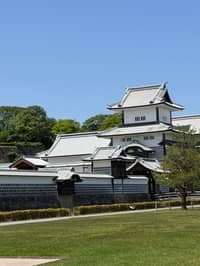
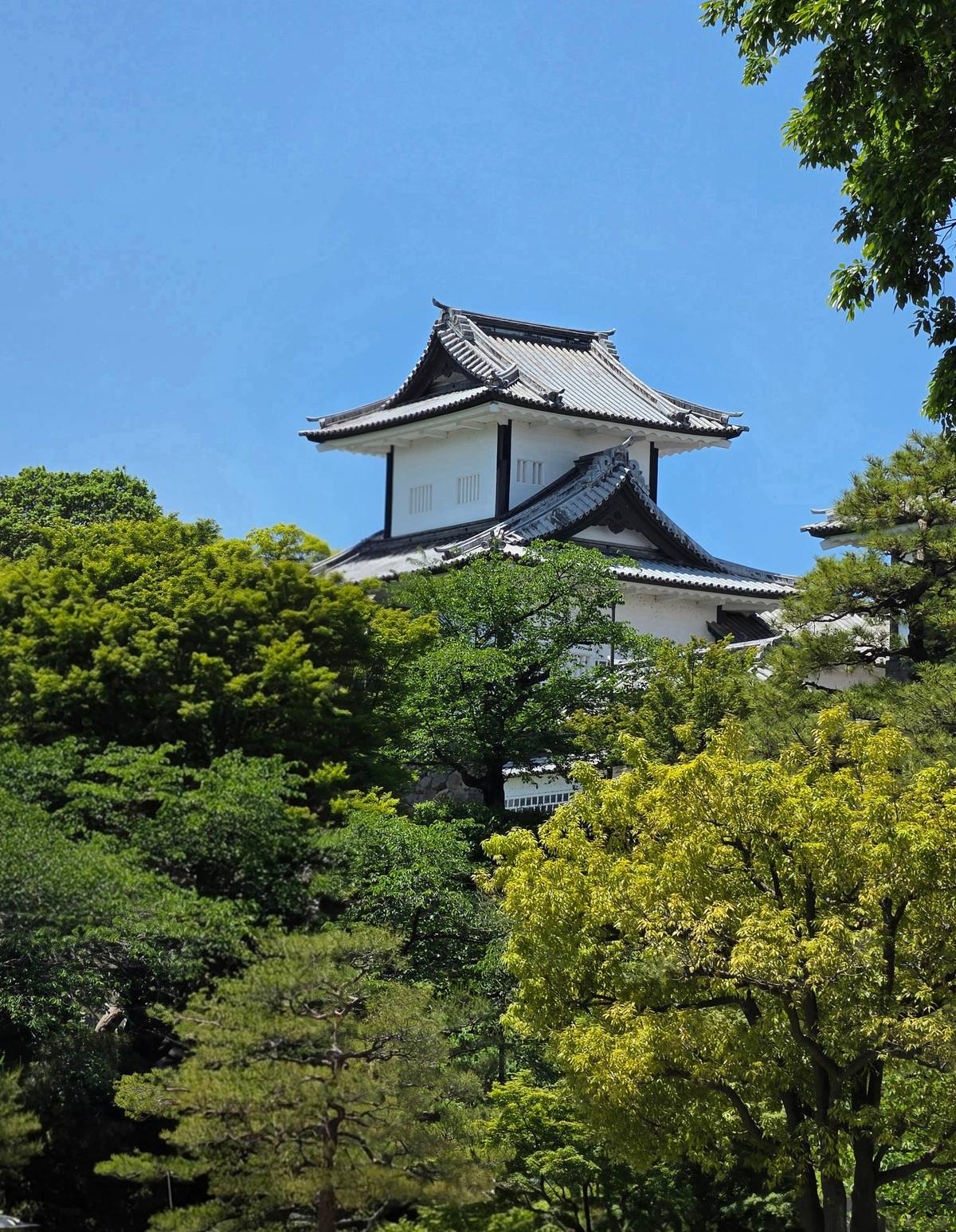
 Our walk
Castle and samurai walk
Nagamachi, castle, Kenroku-en
- Nagamachi
- 40 minutes
- Nomura house
- From outside
- Price
- from $61
Guides
Language
EnglishCurrency
US dollar · $GetYourGuide converts to the currency you select here.
Guide · Samurai quarter
The Nagamachi samurai district keeps its cobbles, canals and tiled earthen walls: what to see in the Nomura house, how lower-ranked samurai lived, and where the castle walk begins.
Editorial team, kanazawacastle.comUpdated October 25, 2026Reading time 6 min42 sources
At a glance
Kanazawa was the centre of the Kaga domain in the Edo period, the seat of the Maeda family, one of the richest lordly houses in Japan.5 The Maeda had all their samurai retainers live in the city, so quarters like Nagamachi once ringed the castle.6 Nagamachi is the one you can still walk through, a few lanes below the castle hill where the river and the canals meet the old town.
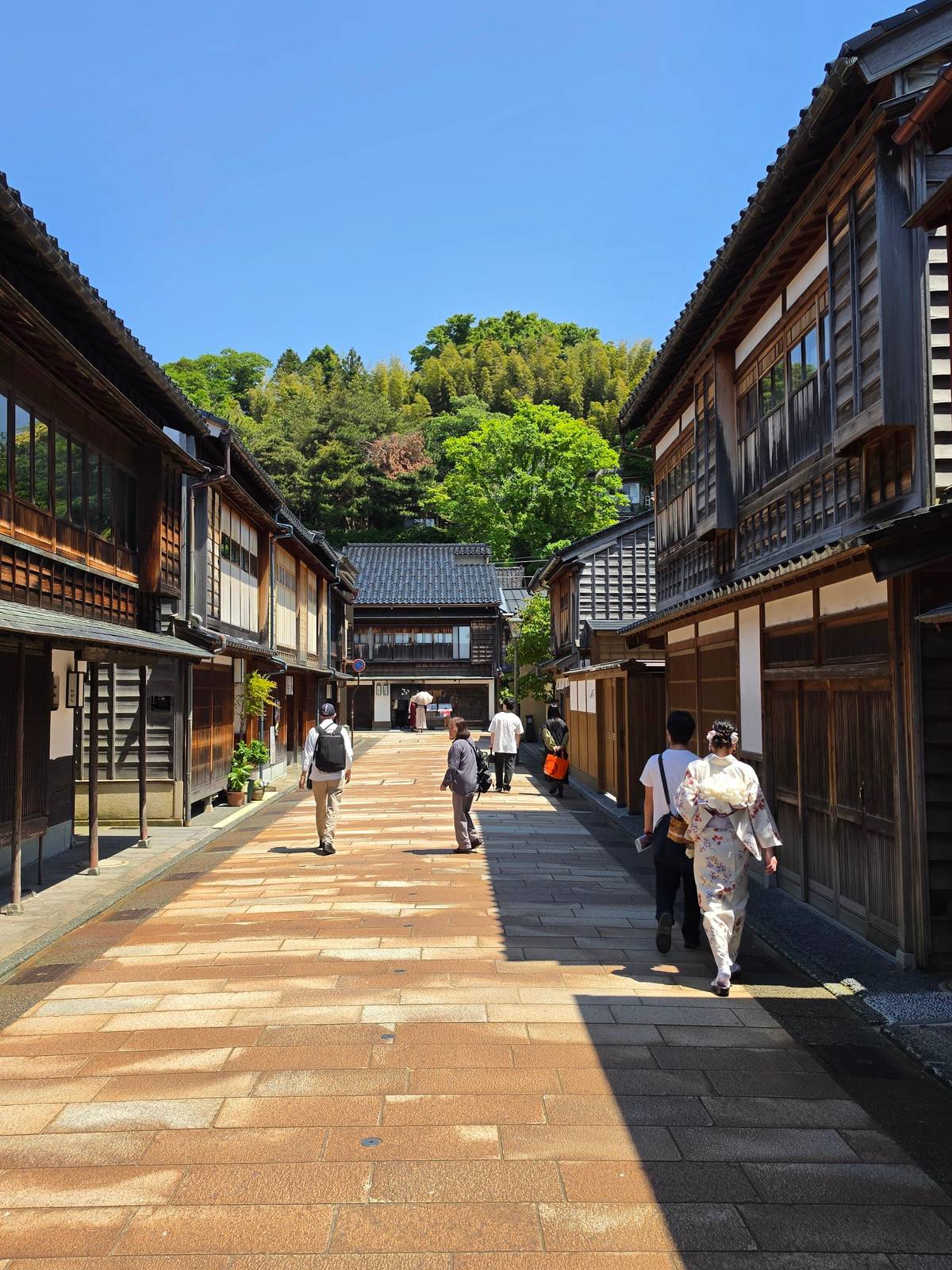
The domain's wealth meant that samurai of even middle rank could build large, handsome homes, and the cobblestone streets and tiled earthen walls you walk past are typical of the richer samurai quarters of that time.1 Behind the walls, the houses face inward toward gardens, so from the lane you see mostly gates, roofs and the tops of pines.
Walking here is free and the lanes are open at all hours, which makes Nagamachi a good first stop on an early morning before the museums open. The quarter is compact: you can follow its main lane, its canal and its side alleys in well under an hour, then step into one house to see what lay behind the walls.
The quarter's story
1583
Maeda Toshiie enters Kanazawa Castle and the family's rule begins.7
Edo period
The Maeda have all their samurai retainers live in Kanazawa.6
1869
Samurai families lose their income and sell or leave their homes.8
Today
The Nomura house and the Ashigaru Museum show both ends of samurai life.24
The earthen walls are the signature of the district. They are thick, smoothed with clay, capped with tiles and broken by wooden gates, and they turn the lanes into quiet corridors where traffic barely passes. The colour changes with the light: ochre at noon, almost orange in the low sun of late afternoon, pale grey after rain.
Canals run along the lanes, and their sound is the background of a walk here. Small bridges cross to the gates of individual houses, and in some places the water flows straight into the gardens behind the walls, which is how the residences kept their ponds and streams filled. Stop on a bridge and look along the water for the clearest view of the walls.
The lanes are narrow and some are still lived in, so keep voices low and step aside for residents and bicycles. A few houses have become shops and cafes, which is a good excuse to sit for a while. If you want a picture without people, come early, before tour groups and the first visitors from the station arrive.
Time in the lanes
What to step into
Guided options
Our walkNagamachi, castle, Kenroku-en
Tickets includedGarden, castle, geisha lanes
 Longest stay
From Kanazawa Station
Decision helper
Choose by time and by what you want to enter
40 minutes in the lanes, then the castle and Kenroku-en with a guide.
Its price includes the Nomura house and garden tickets.
It spends 110 minutes in Nagamachi before the gardens.
The cobbled lanes are public; only the houses charge entry.1
After the domains’ lords ceded authority to the emperor in 1869, samurai families lost their source of income and privilege, and were ultimately forced to abandon or sell their homes.
The Nomura Residence is the house most visitors step into, once the estate of wealthy retainers of the Maeda family.2 Among the heirlooms on display is a full suit of samurai armor, and the rooms show the scale of a well-off household: reception rooms with painted screens, a raised seat for the master, and corridors that open on to the garden.
The garden is the reason to go. The Michelin Green Guide gives the Nomura samurai house two stars, partly for its inner garden with quiet streams and a small waterfall.3 Sit on the veranda for a few minutes: the stepping stones, the lanterns and the koi in the pond are arranged to be seen from inside the house, not from a path.
On the walk sold on this site, the Nomura house is listed as an exterior visit, and the 550 yen entry is named among the costs not included. If you want to go in, you can return after the tour or choose a highlights tour whose price includes the Nomura house and Kenroku-en tickets.
Map
The walk from Korinbo through Nagamachi to the castle and Kenroku-en first, then the teahouse districts and the station, then the mountain road to the thatched villages.
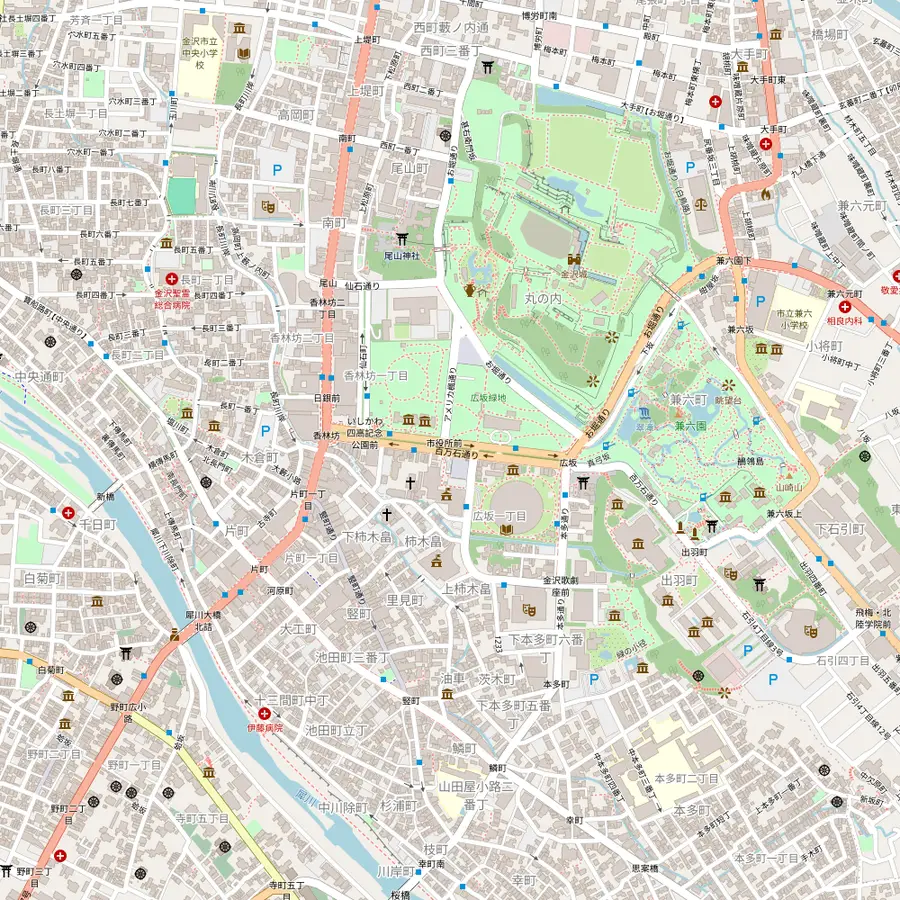 1Starbucks Korinbo (meeting point)2Nomura house, Nagamachi3Oyama Shrine4Nezumita-mon Gate5Gyokusen-inmaru Garden6Hishi-yagura Turret7Kahoku-mon Gate8Ishikawa-mon Gate9Kenroku-en10Seisonkaku Villa1121st Century Museum12D.T. Suzuki Museum
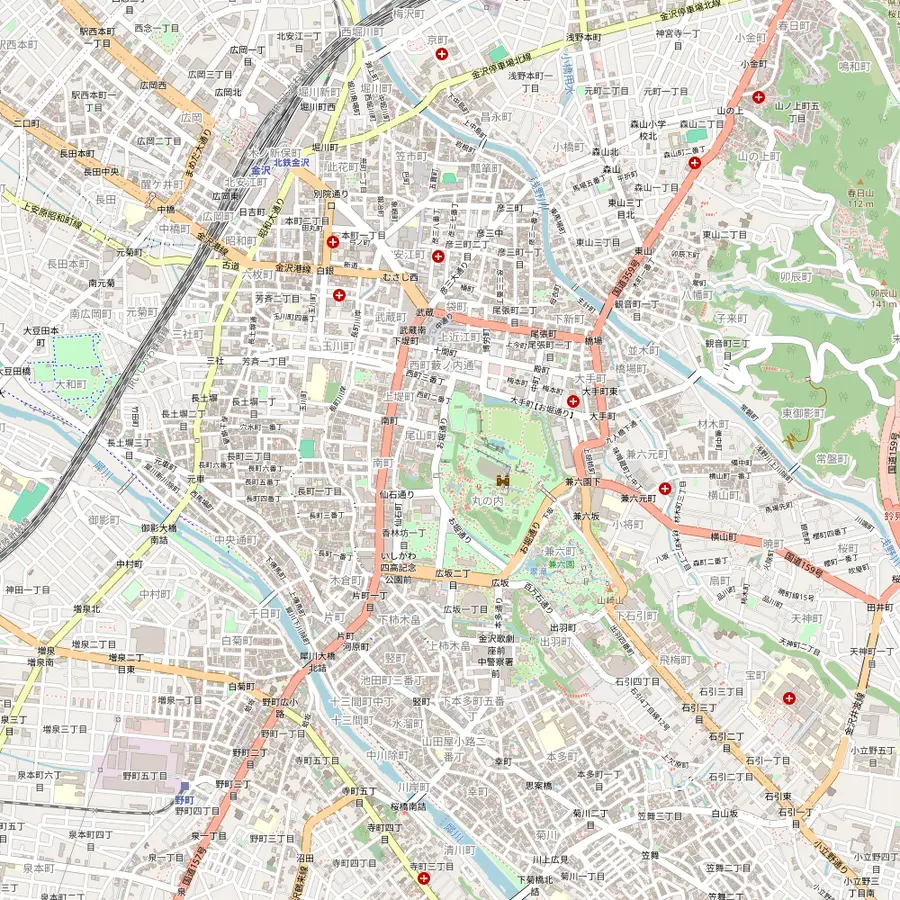 13Kanazawa Station14Higashi Chaya District15Kazuemachi16Nishi Chaya District17Myoryuji (Ninja Temple)18Kanazawa Castle (Ishikawa-mon)19Nagamachi
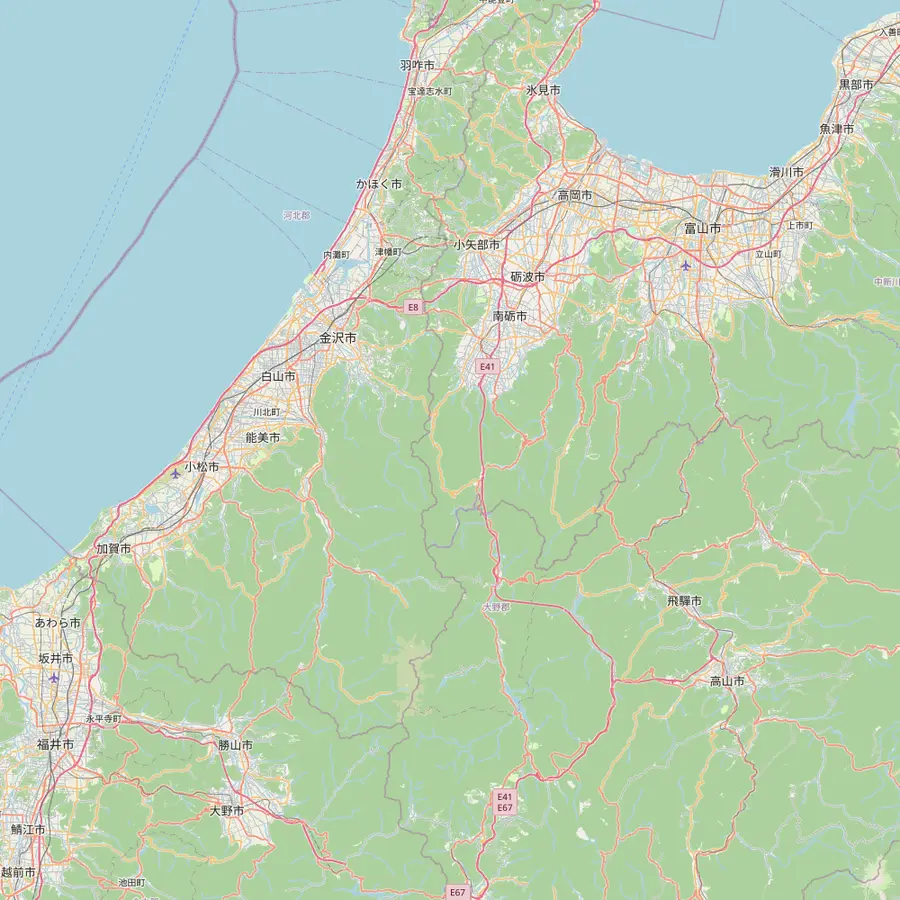 20Kanazawa21Shirakawa-go (Ogimachi)22Gokayama (Ainokura)23Takayama24Toyama25Komatsu Airport
The walking tour sold on this site meets in front of this cafe; Nagamachi is the first stop, a short walk away.
In Google Maps ↗A samurai residence with a full suit of armor on display and a garden of streams, rated two stars by the Michelin Green Guide.23
In Google Maps ↗A shrine across the moat from the western gate of the castle, reached over the restored wooden bridge.
In Google Maps ↗The one castle gate with black plaster between its wall tiles; gate and bridge were finished again in 2020.910
In Google Maps ↗The private garden of the lords, with a 22-meter drop from its highest wall to the pond bottom, recreated in March 2015.111213
In Google Maps ↗A diamond-shaped turret built on angles of 80 and 100 degrees, open daily from 9:00 to 16:30.1415
In Google Maps ↗The working main gate of the castle, rebuilt in 2010 and free to walk through.1617
In Google Maps ↗Rebuilt in 1788, the oldest structure on the grounds, an Important Cultural Property since 1950.1819
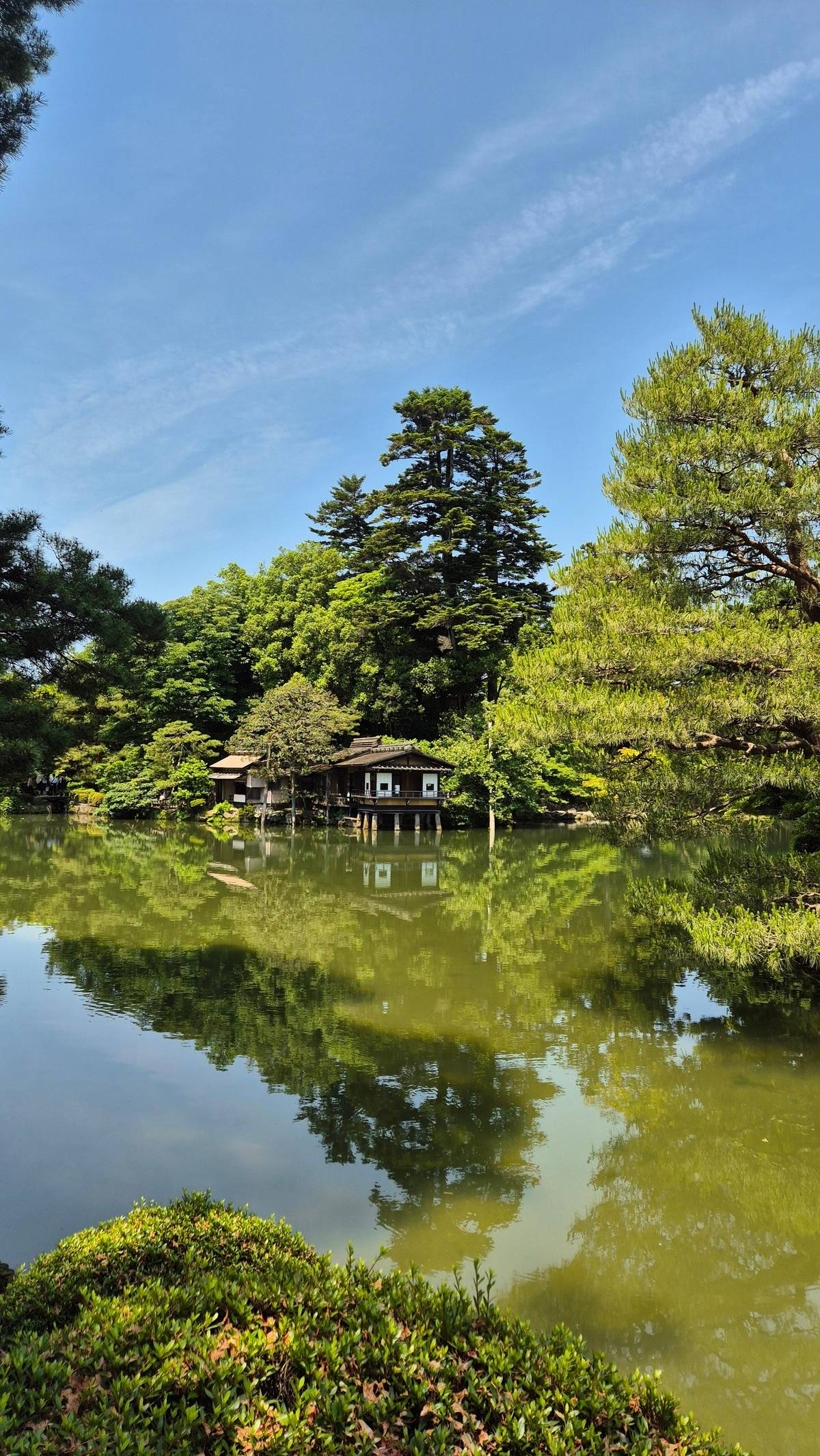
In Google Maps ↗One of the three great gardens of Japan; adults pay 320 yen, in cash only.202122
In Google Maps ↗A villa built in 1863 by the 13th lord for his mother, on the edge of Kenroku-en.23
In Google Maps ↗The free public zone and outdoor works sit beside paid exhibitions; closed on Mondays.2425
In Google Maps ↗A quiet museum with a water garden for the Zen philosopher D.T. Suzuki, entry 310 yen.2627
In Google Maps ↗The fastest Hokuriku Shinkansen, Kagayaki, reaches it from Tokyo in about 2.5 hours.28
In Google Maps ↗The largest of the three historic teahouse districts, established in 1820.29
In Google Maps ↗A small teahouse quarter on the river, protected as a preservation district since 2008.30
In Google Maps ↗Founded in 1820 as well; its little museum in a former teahouse is free.3132
In Google Maps ↗Two storeys from the street and four inside; visits only on a guided tour booked ahead.3334
In Google Maps ↗The castle park costs nothing to enter and opens at 7:00 from March to mid-October.35
In Google Maps ↗Cobblestone lanes and tiled earthen walls of the old samurai quarter.1
In Google Maps ↗Starting point for the tours and buses to the thatched villages.
In Google Maps ↗About 1.5 hours by highway bus from Kanazawa, on the UNESCO list since 1995.3637
In Google Maps ↗Registered together with Shirakawa-go as one World Heritage Site.37
In Google Maps ↗Buses link Takayama and Shirakawa-go with Kanazawa every day.38
In Google Maps ↗Shirakawa-go is also about 1.5 hours away by highway bus from here.36
In Google Maps ↗The nearest airport, about 40 minutes by bus from Kanazawa.39
In Google Maps ↗Checklist
Price calculator
Choose a tour and the number of people
Total from$121
pp from $61
Check availabilityfree cancellationEach total multiplies the lowest current GetYourGuide price of that Kanazawa listing by the number of people, converted at today’s ECB rate; the checkout page has the final amount.
Video
Nothing loads until you tap play.
Not every family in Nagamachi lived so well. At the Ashigaru Museum, two restored homes of the foot-soldier class show how plainly the lower ranks lived.4 After the Nomura house the contrast is striking: small rooms and plain wood where the wealthy had painted screens and a garden pond.
Seeing both gives you the shape of samurai society in Kanazawa. At the top, households with land, servants and art; at the bottom, men of the lowest samurai rank living close to their neighbours. Ask about the ranks if you take a guided walk: reviewers of the walk sold here say questions are welcome all along the route.
Budget extra time if you want to see both houses on your own. The lanes between them are short, and you pass more gates and canal bridges on the way, which turns a museum visit into a proper walk through the quarter.
The quarter's quiet look hides a sudden end. After the lords handed their authority to the emperor in 1869, samurai families lost their income and privileges, and many had to abandon or sell their homes.8 The same year Maeda Yoshiyasu, the 14th head of the family, left the palace in the castle, closing the Maeda era there.40
The Maeda had held the castle for over 300 years, from Maeda Toshiie's entry in 1583 to the surrender of 1869.7 When the retainers' houses changed hands, much of the old life of the quarter went with them, and only a few houses can be visited today. What remains is the street plan, the walls and the water, which still give the lanes their shape.
That history is why a guide helps here. Without it, Nagamachi is a pretty street; with it, each gate stands for a family that served the Maeda and lost its place when the domains were dissolved. One reviewer of the walk sold on this site wrote that the samurai house only made sense with the guide's explanations.
The walk sold on this site starts in front of the Starbucks Coffee at Korinbo, and after 5 minutes on foot the guide takes the group into Nagamachi for 40 minutes. From there it is a 15-minute walk to Kanazawa Castle, then 40 minutes at the castle and 40 minutes in Kenroku-en. The whole route is about 2.5 to 3 km at a relaxed pace.
Along the way the guide shows historical pictures on an iPad and points out the best photo spots, and the listing includes time for photos and short breaks. The live guide speaks English, with an audio guide in Chinese, Dutch, French, Italian, Korean and German, and the walk is rated 4.91 from 247 reviews.
Bring comfortable shoes and cash for the tickets the walk does not include, the Nomura house at 550 yen and Kenroku-en at 320 yen. The price starts from $61. A change of plan up to 24 hours before the Korinbo start is free, and you can book first and pay nearer the day.
Nagamachi lies at the foot of the castle hill, so the rest of the old city is close. The Korinbo crossing, where the walk meets, and neighbouring Katamachi are the districts for shopping, dining and nightlife.41 That makes the samurai lanes an easy detour before dinner, when the walls glow in the evening light.
Across the river to the south, Myoryuji, known as the Ninja Temple, belongs to a line of temples the Maeda built on the northern and southern edges of the city to protect the castle.42 It needs a reservation, so book it before you go.34 The Nishi Chaya teahouse quarter is in the same part of town.
Longer guided days also start here. A full-day tour spends 110 minutes in Nagamachi before Oyama Shrine and the gardens, and an e-bike tour finishes its route in the samurai district after 20 minutes there. Either way, Nagamachi is where the story of the Kaga samurai is easiest to picture.
Your castle walk
Pick a date, meet at Korinbo, and keep the option to cancel at no cost for up to 24 hours before.
Yes, the lanes are public. You pay only to enter houses; the Nomura house costs 550 yen according to the walking tour's listing.
Armor, rooms and a garden. Heirlooms include a full suit of samurai armor, and its garden earned two Michelin Green Guide stars.23
No, it is an exterior visit. The listing names the Nomura house entry among the costs not included.
Very simply. The Ashigaru Museum shows two restored homes of the foot-soldier class.4
They lost their income in 1869. After the lords handed authority to the emperor, many families sold or abandoned their homes.8
40 minutes. It then walks 15 minutes to the castle and continues to Kenroku-en.
Sources