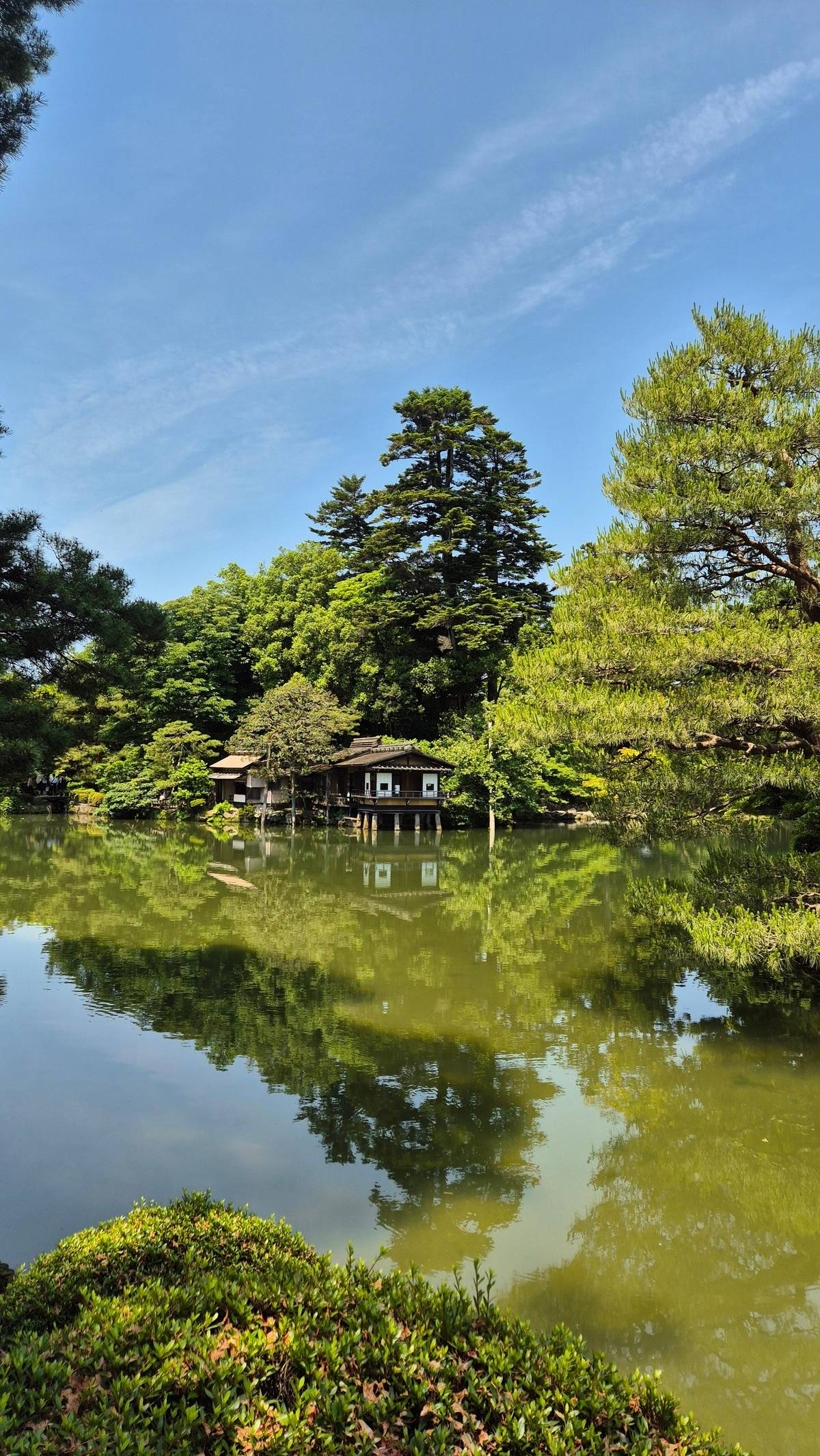
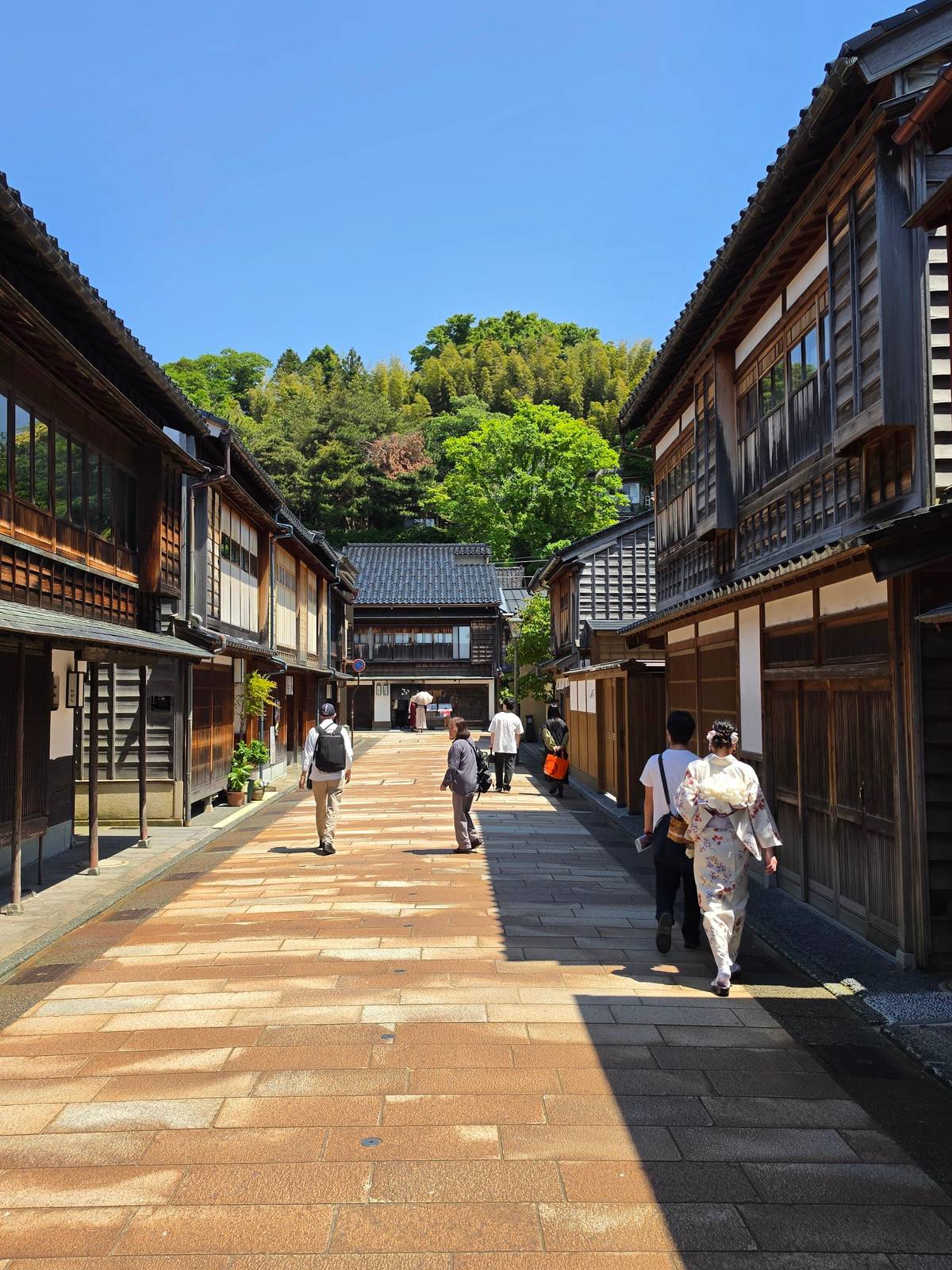
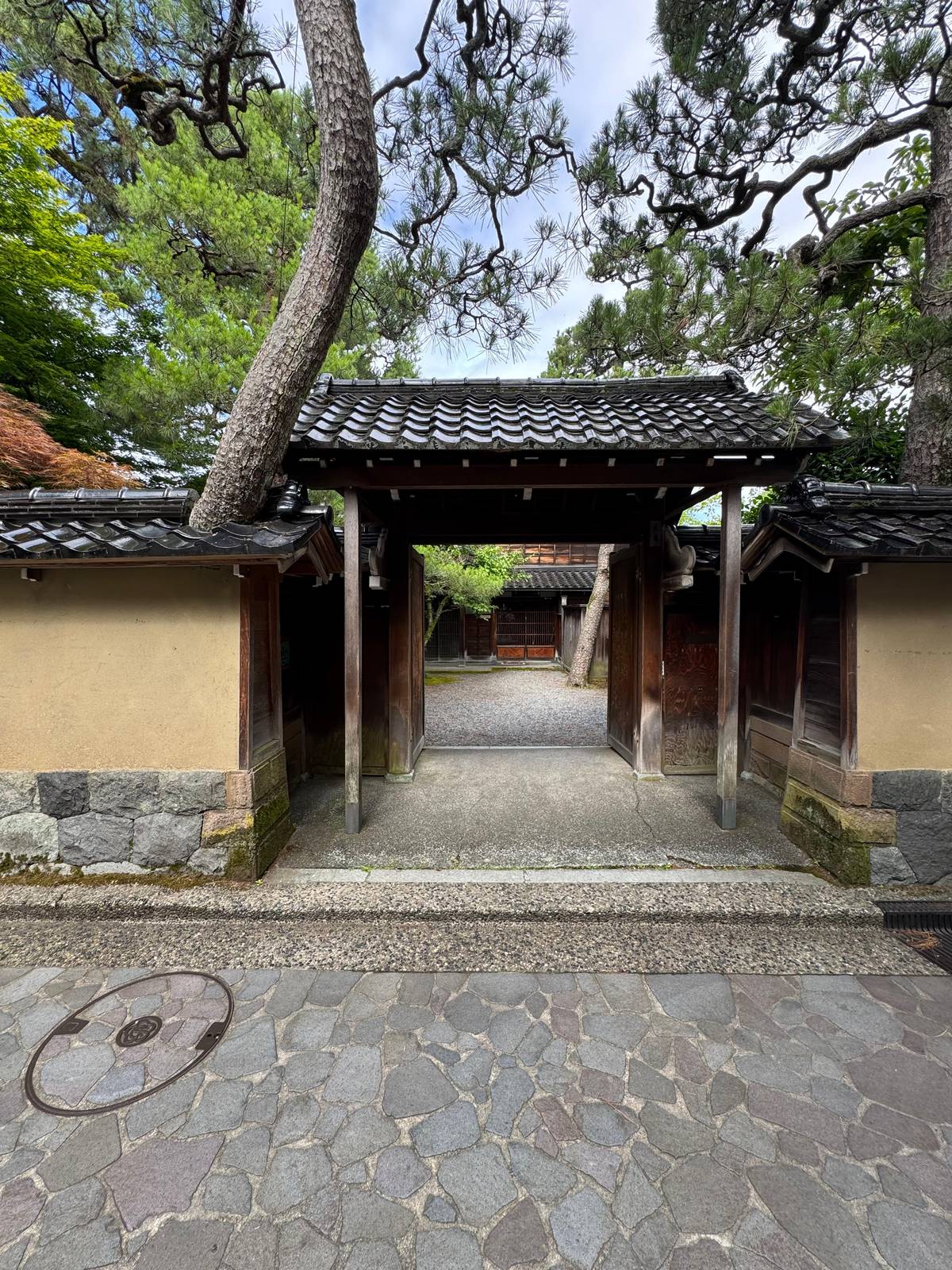
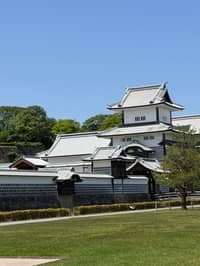
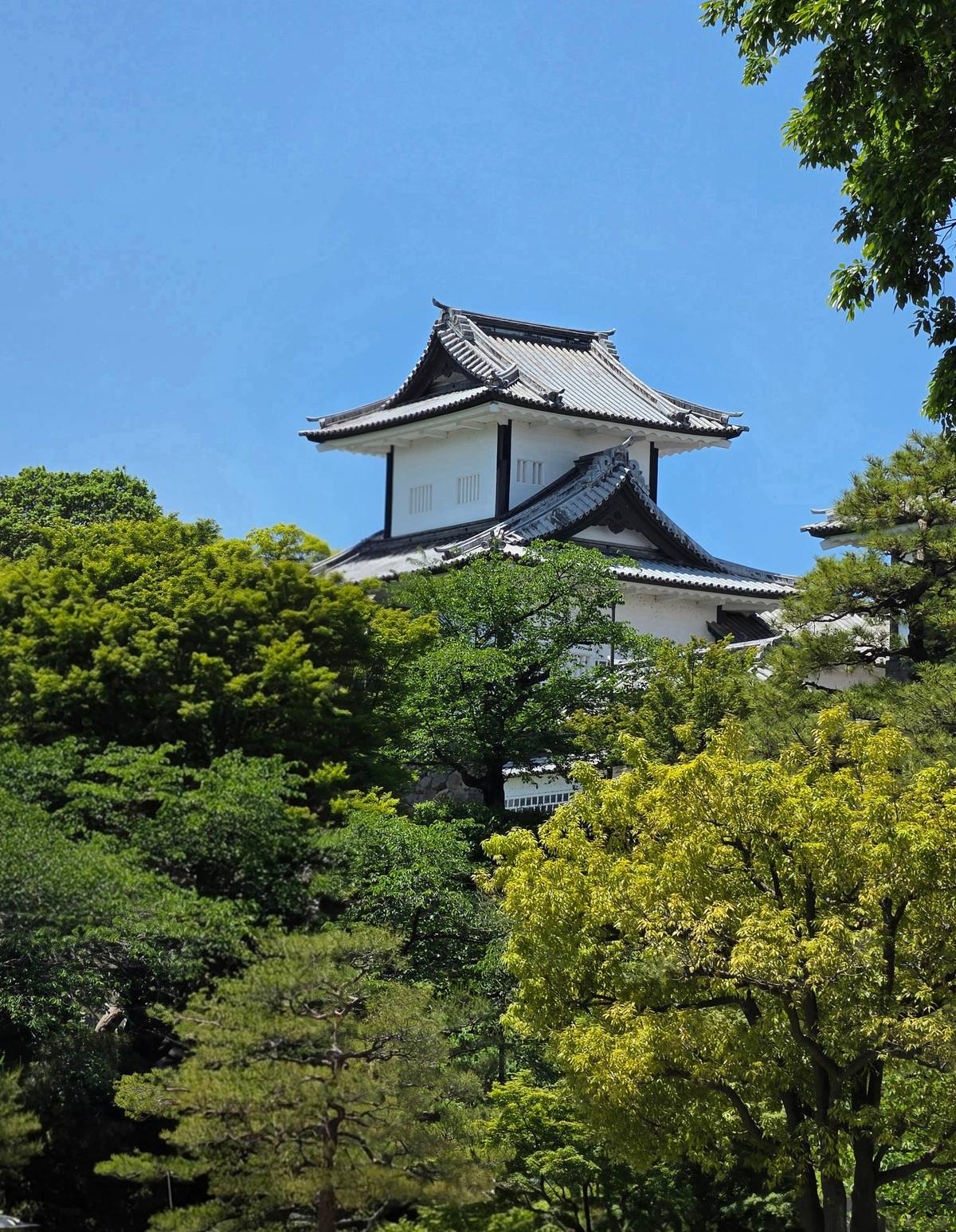
 Mild and bright
Spring
April and May
- Average high
- 17.3 to 22.3 °C
- Highlight
- Cherry blossom
- Wet days
- 12 in April
Guides
Language
EnglishCurrency
US dollar · $GetYourGuide converts to the currency you select here.
Guide · Seasons
Kanazawa in winter means snowfall, rope cones over the pines and short days. Here is what each month brings, from the April blossom to the November leaves, with the normals of the city's weather station.
Editorial team, kanazawacastle.comUpdated October 25, 2026Reading time 6 min23 sources
In short
Ishikawa has four clear seasons: a warm, pleasant spring, a hot and humid summer, a cool autumn and a snowbound winter.6 Kanazawa sits on the Sea of Japan side of the country, where the winter monsoon brings heavy cloud and snow, so the city looks completely different in January than in May. Each season has its own reason to come, and its own clothes to pack. The castle, the samurai lanes and the gardens stay open all year, so there is no wrong month, only different pictures to take home.7
It is also a wet city. The normal annual precipitation at the weather station is 2,401.5 mm, spread across every month rather than packed into one rainy season.8 December is the wettest month at 301.1 mm.3 An umbrella earns its place in your bag at any time of year.
Day length swings widely too. In mid-December daylight lasts only 9.7 hours, against 14.6 hours in mid-June.3 Winter sightseeing days are therefore short, and summer evenings long and warm, which changes how you plan the castle, the gardens and the walk between the districts. Over the year the Kanazawa temperature runs from an average February low of 1.0 °C to an average August high of 31.3 °C.3
The year in Kanazawa
April
Cherry trees bloom; roughly 400 of them light up in the castle park.49
Mid-June to mid-July
Very wet weeks; travel with an umbrella.10
August
Average highs of 31.3 °C and humid nights.3
Mid to late November
January and February
Most of the snow falls, with clear days between.2
Winter is the season people picture when they think of Kanazawa: white roofs over the teahouse districts and rope cones over the pines of Kenroku-en. The first snow arrives in early December, and snowfall continues through January and February, though many winter days are clear.12 A bright morning after a night of snow is the moment to be out early.
At the city's weather station the normal snowfall in January adds up to 67 cm, with a deepest snow cover of 22 cm; February brings 53 cm.1213 January also counts 23 days with at least 1 mm of precipitation and a high of only 7.1 °C, so expect cold, damp days with short clear spells between them.3
Snow tires are a must if you drive in Ishikawa in winter.14 In the city, the bigger risk is slipping on wet stone. The tourist information center at Kanazawa Station rents snow boots, so you do not have to pack a pair.15 Good gloves and a hat make the outdoor sights far more pleasant. Plan indoor stops between the cold stretches: a teahouse museum in Higashi Chaya, the villa of Seisonkaku by the garden, or a warm cafe in an old merchant house, then back out when the sky clears.
Month by month
Climate normals
| Month | Daylight (h) | Darkness (h) | High / low | Wet days | In Kanazawa |
|---|---|---|---|---|---|
| Jan | 9.9 | 14.1 | 7 / 1 °C | 23 | Snow, clear days too |
| Feb | 10.8 | 13.2 | 8 / 1 °C | 19 | Snow, clear days too |
| Mar | 11.9 | 12.1 | 12 / 3 °C | 16 | Snow melts |
| Apr | 13.1 | 10.9 | 17 / 8 °C | 12 | Cherry blossom |
| May | 14.1 | 9.9 | 22 / 14 °C | 10 | Warm spring |
| Jun | 14.6 | 9.4 | 26 / 18 °C | 11 | Rainy season begins |
| Jul | 14.4 | 9.6 | 30 / 23 °C | 13 | Rainy season ends, hot |
| Aug | 13.6 | 10.4 | 31 / 24 °C | 9 | Hot and humid |
| Sep | 12.5 | 11.5 | 27 / 20 °C | 12 | Warm early autumn |
| Oct | 11.3 | 12.7 | 22 / 14 °C | 13 | Comfortable autumn |
| Nov | 10.3 | 13.7 | 16 / 8 °C | 17 | Leaves, yukitsuri |
| Dec | 9.7 | 14.3 | 10 / 4 °C | 23 | First snow |
Temperatures (mean daily maximum and minimum) and wet days, counted from 1 mm, come from the Japan Meteorological Agency's Kanazawa normals, 1991 to 2020; we work out the mid-month daylight ourselves.3 Season according to Ishikawa Travel.6
Three seasons compared
Mild and brightApril and May
 Colour
Mid to late November
 Snow
January and February
Decision helper
Start from the picture you want to take home
The first snow arrives in December. Snowfall continues throughout January and February, although many winter days are clear.
Every November the groundskeepers of Kenroku-en put up yukitsuri, tree supports of bamboo and rope that keep the weight of the coming snow from breaking the branches.11 The ropes fan out from a pole at the top of the tree like the ribs of an umbrella, and with snow on them they turn the garden into a study in white lines.
The garden opens 8:00 to 17:00 from 16 October to the end of February, and free early entry starts at 6:00 in those months.1617 An early visit after snowfall gives you clean, untrodden scenes, and the Kasumiga-ike pond takes on a quiet, almost silver look under a grey sky.
The castle's outer walls are lit every evening until 22:00, and snow on the lead-tiled roofs and white walls makes the lit castle especially striking.18 The lead tiles turn silvery white with weather, which is why the castle looks pale even in summer; in snow, roof and wall almost merge.19
Checklist
Price calculator
Choose a tour and the number of people
Total from$121
pp from $61
Check availabilityfree cancellationEach total multiplies the lowest current GetYourGuide price of that Kanazawa listing by the number of people, converted at today’s ECB rate; the checkout page has the final amount.
Video
Nothing loads until you tap play.
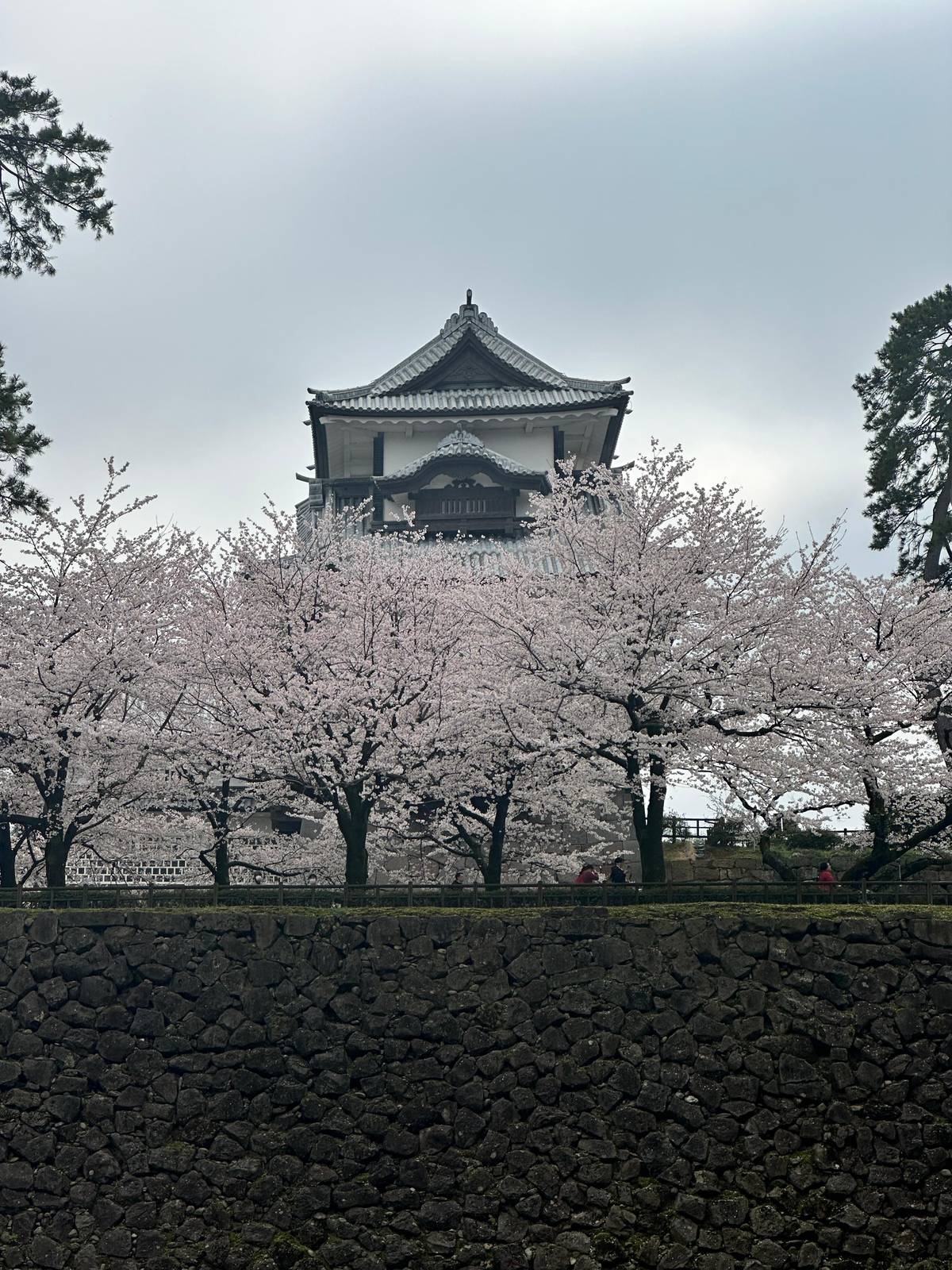
Most of the snow melts by the end of March, and the colour returns quickly. Cherry blossom in Kanazawa arrives in April, and Kenroku-en is one of the most popular places in Ishikawa to see it.4 The castle park adds roughly 400 cherry trees, which are lit at night in blossom season.9
April averages a high of 17.3 °C and May 22.3 °C, comfortable walking weather for the castle, the gardens and the lanes of Nagamachi.3 May has the fewest wet days of the first half of the year, 10, which makes it a strong month for a first visit.3
In blossom season the free early hour at Kenroku-en, which begins at 5:00 in March and 4:00 from April, is worth using.17 Bring a light jacket for the mornings and evenings, when the temperature drops well below the daytime figures, especially in March, when the average low is only 3.4 °C.3
The rainy season runs from mid-June to mid-July and is very wet, so travel with rain gear.10 July brings 233.4 mm of rain in an average year.3 Then the heat peaks, and the August average climbs to 31.3 °C by day and stays at 24.1 °C at night.3
Summer is still a fine time to visit if you plan around the heat. Start early, when Kenroku-en opens for free from 4:00, spend the middle of the day in the city's museums, and return to the streets in the evening.17 The moss in the garden is at its greenest, and long daylight leaves time for everything.
Drink water, wear a hat and choose clothes that breathe. The walk sold on this site is about 2.5 to 3 km at a relaxed pace, with time for photos and short breaks, which helps on a hot morning. August has the fewest wet days of the year, just 9 on average.3
Early autumn has many warm days, and the weather stays comfortable for sightseeing until early November.20 October averages a high of 21.8 °C, pleasant for long walks between the districts, though it still sees 13 wet days.3 September is warm and also one of the wettest months, at 231.9 mm.3
The leaves are at their most vibrant in mid to late November.5 In Kenroku-en, the maples and zelkovas in the south-east of the garden turn gold, crimson and russet, and the first yukitsuri are going up at the same time, so late November gives you both pictures.2111
November cools quickly: the average high falls to 15.9 °C and the month counts 17 wet days, so pack layers and a waterproof.3 By late November the light is soft and low all day, flattering for photographs of the teahouse fronts and the castle walls.
There is no single best time to visit Kanazawa; it depends on what you want. For mild weather and blossom, come in April or May. For autumn colour, aim for mid to late November.45 For snow, rope cones and quiet streets, choose January or February, and accept short, cold days.2
Summer suits travellers who rise early and enjoy long evenings, while the rainy season from mid-June to mid-July is the time to expect wet days.10 Whatever the month, the castle park opens every day, and the walk sold on this site can be dropped at no cost up to 24 hours ahead, which lets you move it if the weather turns.7
A winter trip can also take in the Shirakawa-go Light-Up, held in 2027 on four Sunday and holiday dates in January.22 The thatched village sits deep in snow then, so plan the bus and your clothing carefully, and treat it as a highlight rather than an add-on to a busy day. Lodging booked through the village's tourist association for those nights is allocated by lottery, so plan to come and go the same evening unless you win a room.23
Your castle walk
Pick a date, meet at Korinbo, and keep the option to cancel at no cost for up to 24 hours before.
Yes, from early December. Normal January snowfall at the weather station is 67 cm, with a deepest cover of 22 cm.112
January averages 1.2 °C at night. Daytime highs average 7.1 °C in January and 7.8 °C in February.3
In April. Kenroku-en is one of the most popular places in Ishikawa to see the blossom.4
Mid to late November. The maples and zelkovas in Kenroku-en turn gold, crimson and russet.521
Mid-June to mid-July. It is very wet, and July averages 233.4 mm of rain at the city's weather station.103
Yukitsuri. Bamboo and rope supports put up every November to protect the branches from snow.11
Yes, at the station. The tourist information center at Kanazawa Station rents them in winter.15
Sources
Keep reading