 Recommended
Full day with tea
Samurai, garden, Shima
- Higashi Chaya
- 40 min + Shima 1 hour
- Start
- 9:00, Kanazawa Station
- Price
- from $142
Guides
Language
EnglishCurrency
US dollar · $GetYourGuide converts to the currency you select here.
Guide · Teahouse district
Wooden lattices, a teahouse museum, gold leaf in the shop windows: how to walk the Higashi Chaya District, where geiko still perform, and what a guided day adds.
Editorial team, kanazawacastle.comUpdated October 25, 2026Reading time 7 min46 sources
The essentials
Higashi Chaya is the largest of Kanazawa's three historic entertainment districts, the quarters the city calls teahouse districts, and it was established in 1820.1 Here geiko, the local name for geisha, entertained wealthy merchants with music, dance and games.4 The main street is short and straight, lined with tall wooden fronts and fine lattice screens, and it fills slowly as the day goes on.
The Agency for Cultural Affairs protects the area as an Important Preservation District for Groups of Traditional Buildings under the name Higashiyama Higashi, selected on 14 November 2001 and covering 1.8 ha.2 That small size is part of the charm: you can walk every lane in an hour and still find a quiet side street. Look up at the upper floors, where the entertaining took place, and at the slatted windows that let people inside see out without being seen.
Most buildings now hold cafes, sweet shops, restaurants and craft stores, but some are still working geiko teahouses.6 Treat the district as a lived-in place rather than a stage set. Photograph the street, not people's doorways, keep to the lanes, and if you do meet a geiko on her way to work, let her pass without a camera in her face.
An afternoon on foot
Start
Cross from the city side and enter the main street from the river end.
First stop
See the upper guest rooms of a former geiko house.3
Next
A working teahouse with gold-leaf tatami, open for a fee.7
Hands on
Try a workshop or browse the shops of the craft.8
Dusk
Walk the river-side lanes of the smaller teahouse district.9
The geisha district of Kanazawa is not a show put on for visitors. The world of geiko entertainment is exclusive, and entry to a real banquet comes by referral.5 What you can do is visit the houses that open their doors by day, and book one of the evenings created for guests from outside, where the music and games are explained.
Kaikaro is a working geiko teahouse in a building of nearly 200 years, with a room whose tatami mats are woven with gold leaf, and by day it opens to the public for a fee.7 On certain nights it hosts Geisha Evenings in Kanazawa, an interactive performance in English, with reservations online.10 Some guests are invited to join the traditional drinking games, so sit near the front if you are curious.
The sound of the district is part of the experience. In the late afternoon you may hear a shamisen being practised behind a lattice, the clatter of geta on stone and the quiet of the side lanes. Even without a booking, walking the main street at dusk, when the lamps come on and the shop shutters go down, gives you a feeling for what these streets were built for.
The full-day tour
Three districts
With a guide
RecommendedSamurai, garden, Shima
 Shorter
Garden, castle, geisha lanes
 Hands on
In a red-walled townhouse
Decision helper
Pick what you want to come away with
A former teahouse kept as a museum of geiko culture.3
An interactive show in English, held on certain nights and booked online.10
A 1-hour class in Higashi Chaya, no experience needed.
A small preservation district of 0.6 ha on the river.9
Higashi Chaya and Shima after Nagamachi and Kenroku-en.
Today, many of these buildings function as cafes, restaurants, sweet shops, and craft shops, but some are still geiko teahouses.
Ochaya Shima is a former geiko teahouse that now works as a museum of the district's geiko culture.3 It is the easiest way to see inside: steep stairs lead to the guest rooms on the upper floor, where low tables, red walls and a small courtyard garden show how an evening here was staged. Take your shoes off at the entrance and go slowly on the stairs, which are much steeper than modern ones.
The rooms display hair ornaments, instruments and tableware that geiko used, and the arrangement tells you a lot about the evenings: the guests sat facing an open space where the performers danced, with the garden as a backdrop. Compare it with Kaikaro if you have time, a house that still works today, and you see the same plan carried into the present.7
The full-day tour this page recommends spends 1 hour at Geisha House Shima after 40 minutes in the Higashi Chaya District, so the visit is built in. If you come alone, go early in the day, when the upper rooms are calmer, and keep the main street for later, when the light turns golden on the wood.
Map
The walk from Korinbo through Nagamachi to the castle and Kenroku-en first, then the teahouse districts and the station, then the mountain road to the thatched villages.
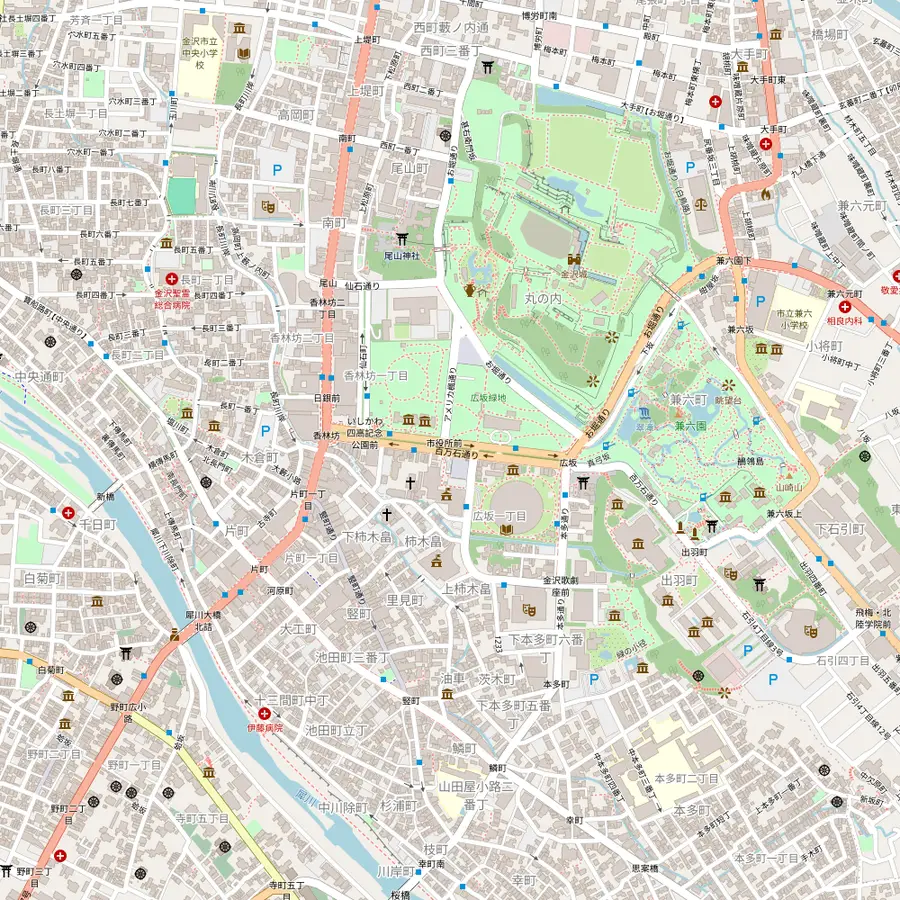 1Starbucks Korinbo (meeting point)2Nomura house, Nagamachi3Oyama Shrine4Nezumita-mon Gate5Gyokusen-inmaru Garden6Hishi-yagura Turret7Kahoku-mon Gate8Ishikawa-mon Gate9Kenroku-en10Seisonkaku Villa1121st Century Museum12D.T. Suzuki Museum
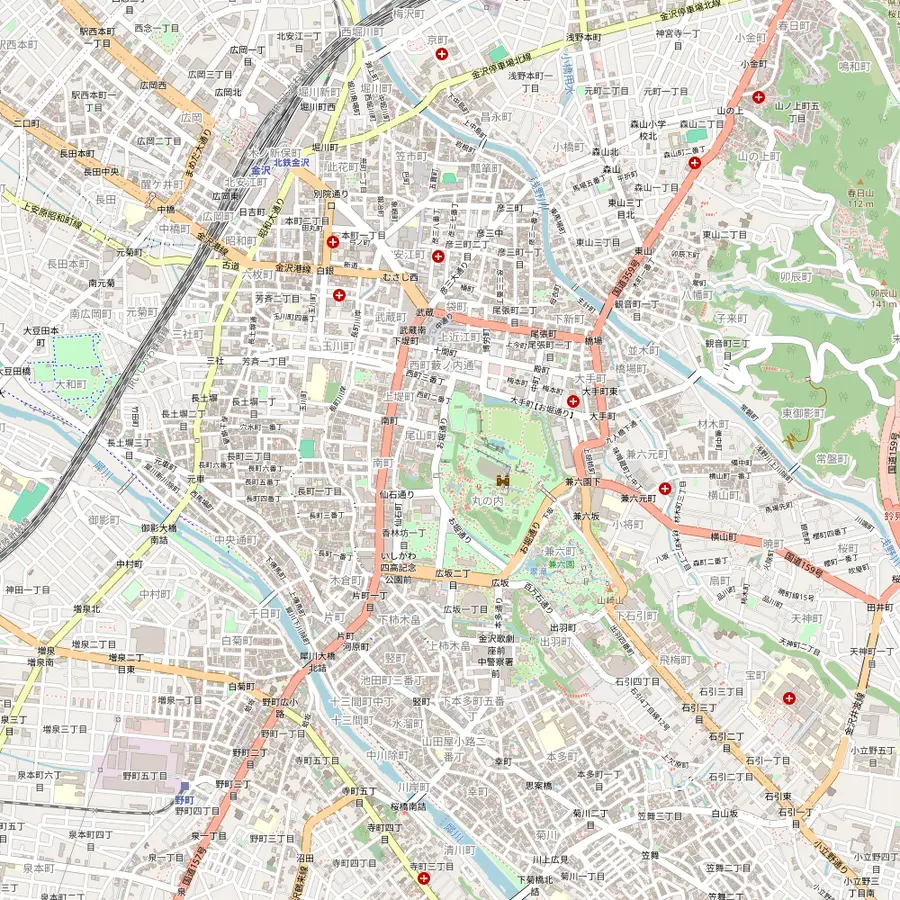 13Kanazawa Station14Higashi Chaya District15Kazuemachi16Nishi Chaya District17Myoryuji (Ninja Temple)18Kanazawa Castle (Ishikawa-mon)19Nagamachi
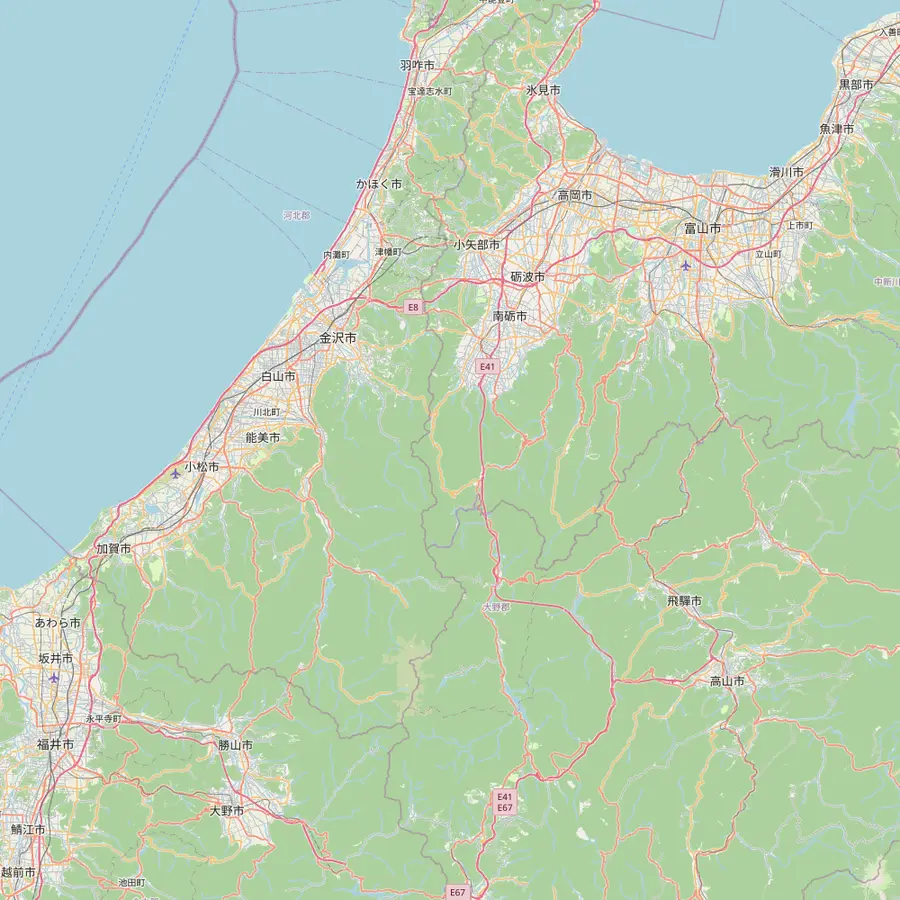 20Kanazawa21Shirakawa-go (Ogimachi)22Gokayama (Ainokura)23Takayama24Toyama25Komatsu Airport
The walking tour sold on this site meets in front of this cafe; Nagamachi is the first stop, a short walk away.
In Google Maps ↗A samurai residence with a full suit of armor on display and a garden of streams, rated two stars by the Michelin Green Guide.1314
In Google Maps ↗A shrine across the moat from the western gate of the castle, reached over the restored wooden bridge.
In Google Maps ↗The one castle gate with black plaster between its wall tiles; gate and bridge were finished again in 2020.1516
In Google Maps ↗The private garden of the lords, with a 22-meter drop from its highest wall to the pond bottom, recreated in March 2015.171819
In Google Maps ↗A diamond-shaped turret built on angles of 80 and 100 degrees, open daily from 9:00 to 16:30.2021
In Google Maps ↗The working main gate of the castle, rebuilt in 2010 and free to walk through.2223
In Google Maps ↗Rebuilt in 1788, the oldest structure on the grounds, an Important Cultural Property since 1950.2425
In Google Maps ↗One of the three great gardens of Japan; adults pay 320 yen, in cash only.262728
In Google Maps ↗A villa built in 1863 by the 13th lord for his mother, on the edge of Kenroku-en.29
In Google Maps ↗The free public zone and outdoor works sit beside paid exhibitions; closed on Mondays.3031
In Google Maps ↗A quiet museum with a water garden for the Zen philosopher D.T. Suzuki, entry 310 yen.3233
In Google Maps ↗The fastest Hokuriku Shinkansen, Kagayaki, reaches it from Tokyo in about 2.5 hours.34
In Google Maps ↗The largest of the three historic teahouse districts, established in 1820.1
In Google Maps ↗A small teahouse quarter on the river, protected as a preservation district since 2008.9
In Google Maps ↗Founded in 1820 as well; its little museum in a former teahouse is free.1112
In Google Maps ↗Two storeys from the street and four inside; visits only on a guided tour booked ahead.3536
In Google Maps ↗The castle park costs nothing to enter and opens at 7:00 from March to mid-October.37
In Google Maps ↗Cobblestone lanes and tiled earthen walls of the old samurai quarter.38
In Google Maps ↗Starting point for the tours and buses to the thatched villages.
In Google Maps ↗About 1.5 hours by highway bus from Kanazawa, on the UNESCO list since 1995.3940
In Google Maps ↗Registered together with Shirakawa-go as one World Heritage Site.40
In Google Maps ↗Buses link Takayama and Shirakawa-go with Kanazawa every day.41
In Google Maps ↗Shirakawa-go is also about 1.5 hours away by highway bus from here.39
In Google Maps ↗The nearest airport, about 40 minutes by bus from Kanazawa.42
In Google Maps ↗Checklist
Price calculator
Choose a tour and the number of people
Total from$284
pp from $142
Check availabilityfree cancellationEach total multiplies the lowest current GetYourGuide price of that Kanazawa listing by the number of people, converted at today’s ECB rate; the checkout page has the final amount.
Video
Nothing loads until you tap play.
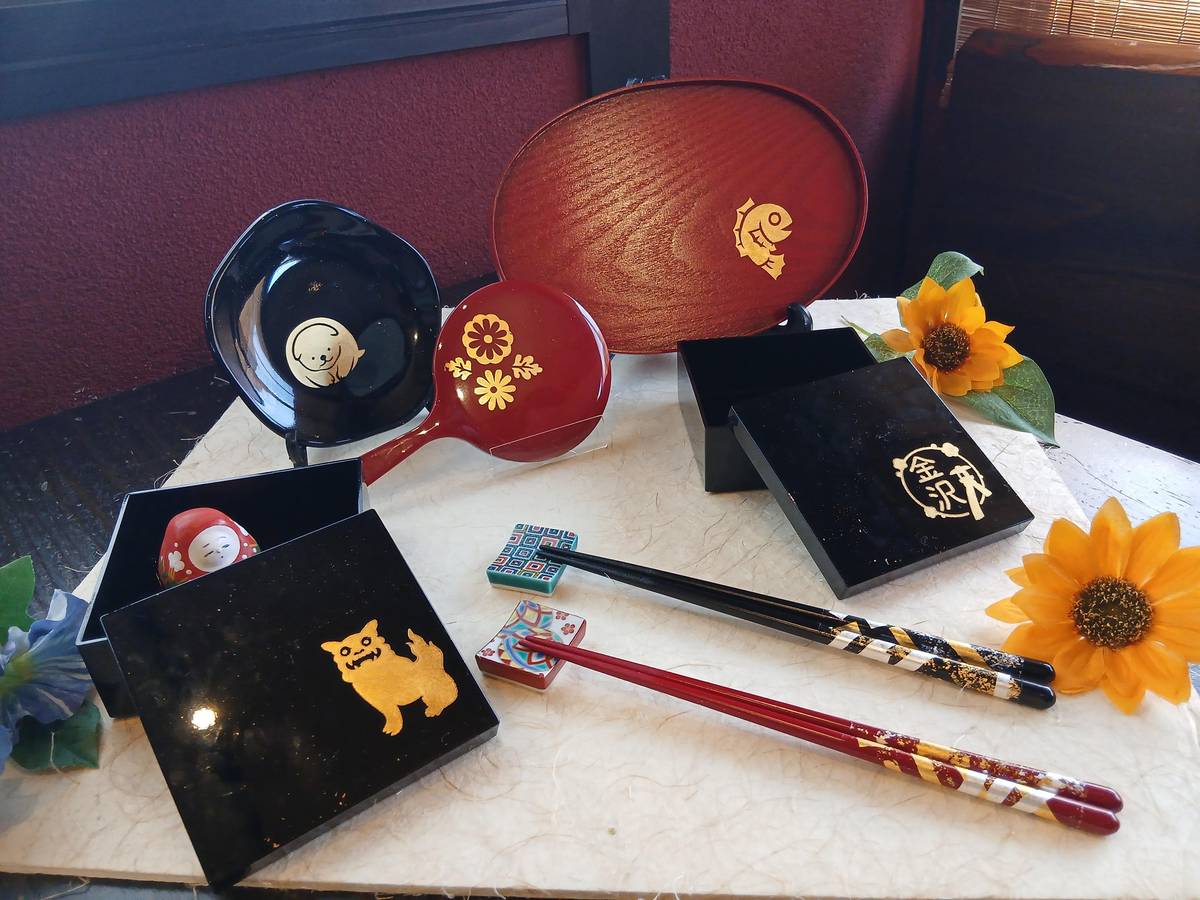
Kanazawa produces 99 percent of Japan's gold leaf, and the craft is everywhere in this district.43 Many shops sell gold-leaf products, from lacquered boxes to cosmetics, and some let you lay the leaf on an object yourself.8 It is fine work: the leaf is so thin that a breath lifts it, which is why the workshops show you how to handle it with bamboo tweezers.
A gold leaf workshop in Kanazawa takes about an hour. One listing holds its 1-hour class in Higashi Chaya on the second floor of a townhouse with bengara-red walls, taught in English and Japanese, with no experience needed, from $32, rated 4.7 from 128 reviews. You leave with a plate, chopsticks or a small box decorated by your own hand.
For the history, the Kanazawa Yasue Gold Leaf Museum stands at 1-3-10 Higashiyama, a few minutes from the main street; it opens 9:30 to 17:00, closes on Tuesdays and costs 310 yen.44 Gold leaf was one of many crafts the Maeda family encouraged, alongside Kaga-yuzen silk dyeing and Ohi ware tea bowls.45 Seeing the museum first makes the shop windows far more interesting.
Across the Asano River from Higashi Chaya, Kazuemachi is a narrow strip of teahouses along the water, protected as a preservation district since 9 June 2008 and covering just 0.6 ha.9 It is quieter than its big neighbour, and its alleys climbing away from the river are some of the most atmospheric corners of the city, especially in rain or at dusk.
The Nishi Chaya district in Kanazawa lies on the other side of the city, south of the Sai River, and was established in 1820 together with Higashi Chaya.11 Its main street is lined with wooden teahouses, some still exclusive geiko parlours, and a former teahouse at one end holds the free Nishi-Chaya Museum, where you can see the rooms where geiko entertained.12
Nishi Chaya pairs well with Myoryuji, the so-called Ninja Temple, which stands in the same Nomachi area and needs a booking.4636 Higashi Chaya pairs with Kazuemachi, which is a short walk over the bridge. If you only have one afternoon, pick the east side; if you have two, give each side its own visit.
Early morning is the time for photographs. The shops are still closed, the stone is often damp from the night, and the street lines up cleanly toward the hill behind it. You will share it with joggers and delivery vans rather than tour groups. Bring a lens that can handle the narrow lanes, and do not block doorways while you frame your shot.
The afternoon is for the museums and workshops. Ochaya Shima, Kaikaro's day opening and the gold leaf shops all work in daylight, and the cafes in old teahouse buildings are good places to sit out a shower.376 A kimono rental fits the setting well, but walk carefully on the stone in borrowed sandals.
Evening is the most atmospheric and the quietest for shopping, since many stores close, but it is when Kaikaro's Geisha Evenings take place on certain nights.10 Lamps along the eaves light the wooden fronts, and the lanes toward Kazuemachi glow over the river. If you are staying near the station, the walk back is easy, and taxis wait near the main road.
The castle walk sold on this site covers Nagamachi, Kanazawa Castle and Kenroku-en and does not enter the teahouse districts, so it pairs naturally with an afternoon here. Do the walk in the morning for the history of the Maeda lords, then cross the river on your own to see the world of the merchants and their entertainers.
The full-day tour recommended on this page starts at 9:00 from Kanazawa Station and covers Nagamachi, Oyama Shrine, a tea ceremony at Gyokusen-an, Kenroku-en, 40 minutes in the Higashi Chaya District and 1 hour at Geisha House Shima. It is priced from $142, rated 4.92 from 158 reviews, with an English-speaking guide and no cancellation fee until 24 hours ahead.
A shorter alternative visits Kenroku-en, the castle and Nagamachi before a taxi takes you the 2.6 km to the Higashi Chaya District for 40 minutes, with the garden and Nomura house tickets included. An e-bike tour passes Kazuemachi and Higashi Chaya at the start of its route. Check each itinerary: one walking tour sold as samurai and geisha lists Kazuemachi, not Higashi Chaya.
Your castle walk
Pick a date, meet at Korinbo, and keep the option to cancel at no cost for up to 24 hours before.
In 1820. It is the largest of Kanazawa's three historic teahouse districts.1
Yes, on set evenings. Kaikaro hosts Geisha Evenings in Kanazawa, an interactive show in English, booked online.10
Ochaya Shima, now a museum. It is a former geiko teahouse showing the rooms, instruments and ornaments of the district.3
No. Its stops are Nagamachi, Kanazawa Castle and Kenroku-en, so plan the teahouses for another part of the day.
99 percent. Many shops in the district sell gold-leaf products and some let you apply it yourself.438
Yes. It sits in a former teahouse and shows the rooms where geiko entertained their guests.12
1.8 ha. The national preservation district, listed as Higashiyama Higashi, was selected on 14 November 2001.2
Sources
Keep reading